Category Archives: Uncategorized

Senator Cantwell Corona virus

A staff worker for US Senator Maria Cantwell (pictured) tested positive for coronavirus.
Getty Images
A staffer for US Senator Maria Cantwell has tested positive for coronavirus – the first known congressional worker to catch the virus, her office said Wednesday.

The unidentified patient, who works out of Cantwell’s Washington, DC, office, has had no known contact with the senator or other lawmakers, Cantwell’s office said in a statement.

The diagnosis led Cantwell to close her DC office for the remainder of the week. Remaining staffers will work remotely.

Cantwell, who represents Washington state, asked other staffers to get tested in light of the positive results.

Seven federal lawmakers since Sunday, including Sen. Ted Cruz, announced they are self-quarantining after coming into contact with people who tested positive for coronavirus.

Doctor with coronavirus shares daily symptoms on Twitter
Billie Eilish takes off her shirt to protest body shaming
NBA suspends season after Rudy Gobert tests positive for coronavirus
How to prepare and stock up for the coronavirus pandemic
Coronavirus going to hit its peak and start falling sooner than you think
Italian doctor at heart of illness shares chilling coronavirus thoughts
MORE ON:
CORONAVIRUS
Trump passes coronavirus test with flying colors: Goodwin
US sports not immune to coronavirus ‘new normal’
NHL evaluates options after NBA suspends season over coronavirus
Jazz player is NBA’s first coronavirus case

12 March, 2020 06:11

Trump address sparks chaos as coronavirus crisis deepens
Analysis by Stephen Collinson, CNN
Updated 12:53 AM EDT, Thu March 12, 2020

(CNN) President Donald Trump set out to steady a rattled nation and a diving economy in a solemn Oval Office address, but instead sowed more confusion and doubts that he is up to handling the fast-worsening coronavirus crisis.

Trump spoke to the nation at a fearful moment, when the rhythms of everyday American life are starting to shut down — with schools closing, the NBA suspended, hospitals on high alert and movie icon Tom Hanks saying he and his wife have the disease.

"The virus will not have a chance against us. No nation is more prepared or more resilient than the United States," the President said, before painting a rosy picture of an economy that is already taking a beating from the virus fallout. The President unveiled several measures to help on that score, to help workers who have to self-isolate and hard-hit by shutdowns, though his call for a payroll tax cut is not popular in Congress.

Trump’s big announcement for keeping the virus at bay — what he said was a 30-day ban on travel to the US by Europeans and restrictions on cargo — was immediately engulfed in confusion.

The President later rushed to clarify on Twitter that he was stopping travel and not trans-Atlantic trade in goods, and officials said his plan did not apply to Americans or US permanent residents — though such travelers would face mandatory quarantines.

Trump also caused a muddle when he said he had convinced health insurance providers to waive all copayments for coronavirus treatments.

A White House official later said the President had meant to say that the copayments would be waived for coronavirus tests — but would still apply to treatments for the disease.

Sowing confusion

READ: Trump’s Oval Office speech on the coronavirus outbreak
The confusion was symptomatic of an administration that has often struggled to frame detailed policies and present them coherently. Trump’s top assignment on Wednesday was to show that he was in charge and that he appreciated, finally, the grave nature of the weeks that lie ahead. But the confusion over the travel ban turned his speech into something of a debacle and may up exacerbating uncertainty over his leadership.

And his travel ban announcement was made apparently without consultation with the travel industry or US allies and seems set to cause massive disruption that will deepen already cascading economic damage unleashed by the crisis.

The move could cause mass cancellation of trans-Atlantic flights, which could throw the aviation industry into an moment of existential challenge. It is likely to do nothing to quell investor panic after Wall Street on Wednesday dipped into a bear market. For example, Dow Futures plunged more than 1,000 points after Trump’s speech.

"This is not a financial crisis. This is just a temporary moment of time that we will overcome together as a nation and as a world," Trump said in his address.

On a more fundamental level, the travel ban plan raised basic questions about the President’s understanding of a crisis he has minimized, blamed on Democrats and predicted will just go away soon.

Department of Homeland Security guidance suggested the restrictions exempted US nationals and permanent residents, who would face quarantine when they came home. And the President did not explain why his ban did not include citizens of the UK — where the virus has also taken root.

But the biggest problem facing the US is not more cases of coronavirus coming from Europe — it is that the disease has taken root on US soil itself by community spread.

Pressing issues now revolve around how Americans should respond to the situation and to what extent they should change their daily patterns. Trump did advise halting nonessential visits to care homes for the elderly — the highest risk group from the virus.

But he didn’t explain how he would alleviate what health officials fear will be a crowding of hospitals, the continuing lack of proper testing or the coming strain on resources such as breathing machines needed to keep the sickest patients alive.

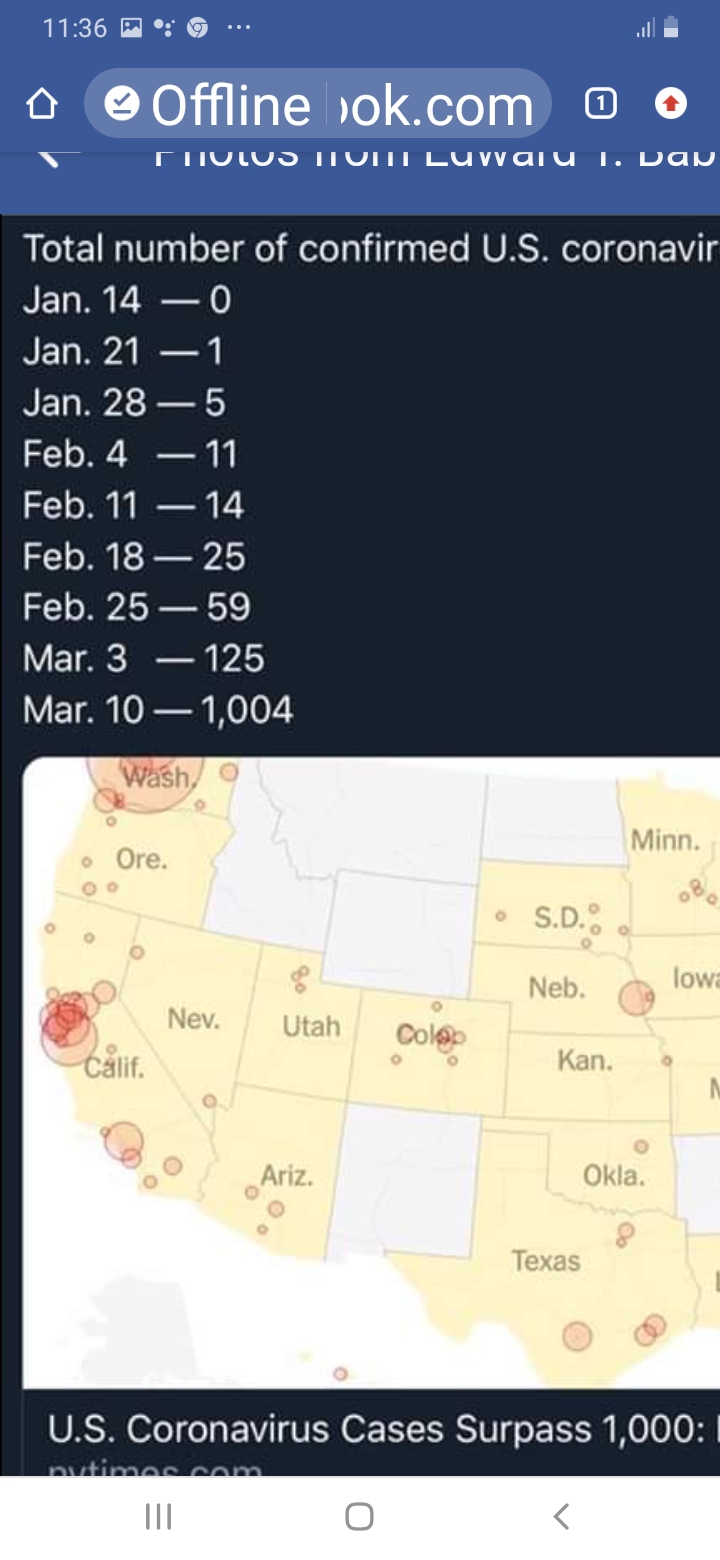
He argued that the threat was still "very low" for all but the old and infirm, on a day when one of his top public health officials, Dr. Anthony Fauci, predicted the current scenario — with more than 1,200 people sick in the US and 38 dead, is "going to get worse."

Trump speech likely to split the nation
To Trump’s supporters, his address likely came across as a decisive and bold move to face up to a national challenge.

But to critics it followed a familiar playbook — as he blamed others for the crisis, basked in self-congratulation and xenophobia, and misled the country about his actions so far.

"This is the most aggressive and comprehensive effort to confront a foreign virus in modern history," Trump said, misrepresenting his own and his administration’s catalog of missteps.

The President did not mention, for example, the shortage of testing kits, which means officials cannot even get a strong read on how far the disease has spread across the nation.

Presidents use Oval Office addresses in moments of extremis, to bind Americans together to confront a challenge that threatens their collective security.

But Trump’s toneless, almost resentful address as he faces a challenge from outside that could threaten his reelection hopes is unlikely to fulfill the soaring mission of the presidency.

His central remedy — blaming China, where the crisis was spawned, and Europe for becoming afflicted with it — was consistent with his political mantra of demonizing foreigners.

The idea that a virus that affects all humans and is a naturally occurring force was some kind of foreign-brewed threat sent to attack Americans is in itself staggering in its conception.

The President did announce a raft of measures to support businesses and individuals with tax relief and low interest rates as the virus tightens its grip on the US.

But Trump’s plan to self-isolate the US from Europe appears to be a case of closing the stable door after the horse has bolted — the virus is already here and infecting more Americans by the day.

CORONAVIRUS ships

Coronavirus on the high seas: Why the U.S. can’t touch cruise lines
The coronavirus reveals the power of industry and holes in regulation.


The Regal Princess cruise ship was given a "no sail" order by the Centers for Disease Control and Prevention amid concerns that crew had been exposed to coronavirus.
The nightmare of coronavirus outbreaks on cruise ships has revealed an industry that’s skirted oversight for years and used powerful allies in Washington to keep the government out of its business.

In 2013, an engine fire aboard the "Carnival Triumph" left 4,000 people adrift with no running water or power and scarce food. Just a year later, Royal Caribbean International earned the dubious distinction of breaking the record for the largest amount of people sick from a norovirus infestation — nearly 700 people. The press wrote stories, policymakers gnashed their teeth — and nothing changed because the U.S. government is largely powerless to intervene.

In essence, cruise ships are a regulatory black hole. The cruise industry is insulated by ship registrations in foreign countries and shielded by a powerful lobby with sway in tourism-dependent U.S. states like Florida.

The cruise industry disproportionately counts Americans as customers but operates primarily in international waters and avoids tough scrutiny by registering ships mostly in small Caribbean countries with little incentive to enforce international treaties. That has led to a hodgepodge of loosely enforced standards, which regulators in the U.S. won’t be able to change quickly.

And when lawmakers have tried to get tougher, such as creating more requirements for cruise ships to dock at U.S. ports, the well-heeled industry pushes back hard.

Rep. Doris Matsui (D-Calif.), who has for years pressed for greater regulations on cruise ships, said the industry fought against her last bill on the issue, which was enacted in 2010. It set some new safety and security requirements for cruise ships.

“They’re very strong,” she said. “I had the most difficult time passing that first bill.“ She said the only reason she was able to get it passed is that a constituent who had been raped on a cruise ship and other cruise ship crime victims were willing to tell their stories.

After initially insisting that no restrictions were needed, in recent days the cruise industry has presented a plan to the White House to bar the elderly from cruising over coronavirus risks. But that hasn’t stopped some sales managers from using dubious sales tactics — including Norwegian Cruise Lines, which reportedly encouraged sales reps to lie to potential customers with fantastical pitch lines.

"The Coronavirus can only survive in cold temperatures, so the Caribbean is a fantastic choice for your next cruise," according to a list of talking points put together by sales managers in the Miami office, according to the Miami New TImes. Norwegian did not respond to a request for comment.

Amitai Bin-Nun said that Carnival Cruise Line recently called him with a sales pitch, where the marketer tried to suggest that Carnival — whose Princess Cruises line has had at least two serious coronavirus outbreaks — hasn’t had any problems with the coronavirus.

“I said, ‘That’s not true; there were two Carnival cruises with serious Covid spread, including the Royal Princess,’” Bin-Nun told POLITICO. “And she said, ‘Oh, that’s international — that doesn’t impact Carnival, which is domestic,’ and kept saying they’re taking precautions and it’s all OK. It was fairly aggressive.”

Chris Chiames, chief communications officer for Carnival Cruise Line, underscored that Carnival Cruise Line and “other brands under the Carnival Corporation banner that have had guests and or crew diagnosed with COVID-19“ are “separate operations,” but that Bin-Nun “didn’t like our sales rep trying to make a nuanced case“ and that the sales rep "should have left well enough alone.”

‘Flags of convenience
Cruise lines typically register ships under so-called “flags of convenience,” in Panama, the Bahamas and other countries chosen for their low wages, cheap fees and lax regulations. The International Maritime Organization makes the international rules that govern shipping, including cruising, but it has no enforcement power. That falls to the countries where the ships are registered, to which cruise customers provide needed tourism dollars. Some popular flags of convenience, like the Bahamas, have just one person in charge of inspecting ships that dock there.

Of the industry’s $45 billion impact, $24 billion was spent directly inside the United States in 2018, generating more than 172,000 jobs, according to a report by the Florida-Caribbean Cruise Association. And cruise lines spend more than $3 million a year on lobbying.

Concern about the relative lack of laws and regulations that seek to enforce order on board cruise ships crops up sporadically in Congress, usually after a high-profile disaster strikes — former Sen. John Rockefeller (D-W.Va.), then chairman of the Senate committee that oversees transportation, held several bruising hearings on problems within the cruise industry and used his bully pulpit to attempt to force changes. But once he left office, nobody with such a high profile took up the cause, and those efforts have largely lost traction.

Behind the scenes, industry lobbyists have been talking to lawmakers, including those from Florida, a state that’s dependent on tourism dollars. Cruise lines and port directors met with the Florida House delegation Wednesday evening.

So far, Florida lawmakers with ports in their districts say the cruise industry has mostly been asking for information or for help getting into ports. They haven’t yet asked for any kind of financial support — but that may be next.

Rep. Frederica Wilson (D-Fla.) said she expects that the House Transportation and Infrastructure Committee, which she serves on, will put together some sort of bailout package for the cruise lines and other parts of the travel industry.

Advertisement

“They’re losing money hand over fist,” Wilson told POLITICO. “So we’ll be trying to find out how we can help. I’m sure they have tons of suggestions.“

But Peter DeFazio (D-Ore.), chairman of the Transportation Committee, said Tuesday that he’s not interested in bailing out the cruise industry.

“They aren’t American,” he said. “They don’t pay taxes in the United States of America. If they want to re-flag their ships … and pay U.S. wages and pay U.S. taxes, then maybe."

Rep. Donna Shalala (D-Fla.), who represents the Port of Miami, said cruise lines have “absolutely not” asked for a bailout, but noted: “There are 150,000 jobs at stake.” The former HHS secretary also praised the cruise industry for its long-standing work with the public health community on infectious diseases and noted that “they’re stepping up even those” protocols.

Republican Rep. Bill Posey, who represents Port Canaveral, Fla., said the cruise lines’ concerns “are the same as everybody else.”

“Obviously they’re concerned about revenue, but they’ve all expressed that they’re concerned about their customers too,” he said. The congressman said they’ve been calling his office asking for nothing but information. “First couple messages I got from them I thought, ‘OK …’ but they just said, ‘What’s the latest, can you keep us posted?’ I said sure.”

He would be the wrong tree to bark up for government support anyway: “I don’t do bailouts.”

‘Cruise lines exploit ports’
Ross Klein, interim dean and professor in the School of Social Work at St. John’s College in Newfoundland, Canada, said the IMO "sets international regulations that have no standing and no enforceability. The U.S. chooses not to pass laws. They don’t want to ruffle the flags of the cruise industry.”

Advertisement

"Cruise lines exploit ports," said Klein, who has written several books about the cruise line industry and tracks disasters at sea on his website.

The Cruise Lines International Association, the trade group for cruising, resists the notion that regulations have no teeth.

“There are three robust layers of inspection and enforcement of international law and other requirements, including multiple and frequent scheduled and unannounced inspections in the interest of protecting passengers, crew and the environment,” said a CLIA spokesperson, noting that ships at sea are subject to IMO and International Labour Organization standards, as well as enforcement and inspection from the countries of registration. And for ships entering and departing U.S. ports, the U.S. Coast Guard, CDC and EPA set standards.

“Reporting is required across all areas of environment, safety, sanitation, etc.,” the spokesperson said. “No other form of travel provides such a high level of transparency in reporting.“

Languishing bills
Countries where the ships dock do have some sway, giving the United States what amounts to its only point of leverage. Once a cruise ship is in a country’s territorial waters within 12 nautical miles of a port, that country has jurisdiction.

“Even if they fly under foreign flags, there’s still a way to reach them in terms of insisting on basic medical care,” said Sen. Richard Blumenthal (D-Conn.), sponsor of a bill, S. 3124 (116), aiming to prevent and address crime on cruise ships, the Senate companion to Matsui’s bill. “If they promote or advertise or do business here, the holding companies can be held responsible.”

Blumenthal and Matsui’s bills have been introduced repeatedly since 2013 but have never advanced to the Senate floor. They include some provisions to ensure adequate medical personnel on board a cruise ship, but don’t deal with other issues that have emerged during the coronavirus outbreak, like disinfection regimes or quarantine protocols.

Both Blumenthal and Matsui say they want to add language to their bills to address communicable diseases.

Advertisement

“That’s the next step,” Matsui told POLITICO. “I believe what I’ll do now is just get into the whole thing about how they have to check for hygiene and cleanliness and have a protocol.”

“They really have to get their act together and get experts on board and have people who understand how a virus works,” she added. “They need to professionalize this whole thing.”

A Japanese infectious diseases expert who was allowed onto the Diamond Princess, where more than 600 passengers were infected with the coronavirus, released a video on YouTube blasting the “chaotic” process to try to control the spread of the disease onboard the ship, conducted by people with no background in infection control.

New research in the Journal of Travel Medicine has shown that quarantining passengers on board the ship may have caused the number of infections to balloon and that had passengers been allowed to evacuate, nearly 90 percent of the coronavirus cases could have been avoided.

FILED UNDER: PETER DEFAZIO, FREDERICA WILSON, BILL POSEY, TRANSPORTATION, DONNA SHALALA, CORONAVIRUS
Sign up for POLITICO Playbook and get top news and scoops, every morning — in your inbox.
About Us
Advertising
Breaking News Alerts
Careers
Credit Card Payments
Digital Edition
FAQ
Feedback
Headlines
Photos
POWERJobs
Press
Print Subscriptions
RSS
Site Map
Terms of Service
Privacy Policy
© 2020 POLITICO LLC

Harley-davidson model

Models Overview
The Harley-Davidson Model Overview
At Huntington Beach Harley-Davidson we stock all the model families from Harley-Davidson. Ranging from the nimble and stripped down Street® models to the feature-rich fully-customized CVO® lineup, you’ve got plenty of choices. Take a look at each model line here at Huntington Beach Harley-Davidson in the Anaheim and Irvine, CA area!

Harley-Davidson Street™
The StreetTM lineup is the newest, lightest set of bikes from Harley-Davidson. These bikes are aimed at urban riders who demand a nimble, fun-to-ride bike, with plenty of power and authentic Harley-Davidson style.

GET DETAILS ON THE STREET LINE

Harley-Davidson Street™ Models

Street™ 500

Street™ 750
Sportster®
The Sportster® models are classic Harley-Davidson cruisers that borrow vintage styling cues and drag-strip tested performance. They are generally more stripped down and lighter than many of the other Harley-Davidson models, so they are suited for shorter rides, and they’re perfect for newer riders.

GET DETAILS ON THE SPORTSTER LINE

Sportster® Models

Iron 883™

SuperLow®

SuperLow® 1200T

1200 Custom

Forty-Eight®

Seventy-Two®
Dyna®
You get big V-Twin power and custom chopper good looks with the Dyna® lineup. These bikes are more powerful than the Sportster® or StreetTM models, but they are still relatively minimal and aimed at rides in and around town, since they lack long-haul touring features.

GET DETAILS ON THE DYNA® LINE

Dyna® Models

Low Rider

Fat Bob

Wide Glide

Switchback

Street Bob
Softail®
The Softail® lineup differs primarily from the Dyna® model line because all bikes in this family use a distinctive hidden rear suspension, which preserves a unique rigid-bike look, while still maintaining comfort and handling. The Softail® models might be the most recognizable representatives of classic Harley-Davidson cruiser style.

GET DETAILS ON THE SOFTAIL® LINE

Softail® Models

Fat Boy®

Fat Boy® Lo

Softail® Deluxe

Heritage Softail® Classic

Softail Slim®

Breakout®
V-Rod®
The Harley-Davidson V-Rod® lineup includes bikes that are distinctly aggressive and powerful, with classic drag-inspired good looks. The V-Rod® models embody the power cruiser genre, with massive 60-degree V-Twin engines, developed by Harley-Davidson in cooperation with Porsche, so you know they deliver race-ready performance.

GET DETAILS ON THE V-ROD® LINE

V-Rod® Models

Night Rod® Special

V-Rod Muscle®
Touring
The Touring models include the touring amenities that make Harley-Davidson motorcycles the best choice for long-haul rides. With features like full fairings, hard-shell panniers, ultra bright lighting, infotainment systems, and more, you’ll find that a bike from the Harley-Davidson Touring lineup will be your reliable companion on even the longest rides.

GET DETAILS ON THE TOURING LINE

Touring Models

Road King®

Street Glide®

Street Glide® Special

Electra Glide® Ultra Classic®

Electra Glide® Ultra Classic® Low

Ultra Limited

Ultra Limited Low

Road Glide®

Road Glide® Special
CVO™
The Harley-Davidson Custom Vehicle Operations lineup is made up of models from other Harley-Davidson lines. CVOTM models aren’t in stock, because the CVOTM team customizes these bikes to offer more power, more performance, and more premium style. They also generally get more standard equipment, including upgraded infotainment, navigation, and more.

GET DETAILS ON THE CVO™ LINE

CVO™ Models

CVO™ Street Glide®

CVO™ Limited

CVO™ Road Glide® Ultra

CVO™ Softail® Deluxe
Trike
This three-wheeled lineup gives riders a bit more stability and confidence, with all the style and features you expect from a Harley-Davidson. These models also offer unbeatable touring capacity, thanks to the larger size and increased comfort.

GET DETAILS ON THE TRIKE LINE

Trike Models

Freewheeler™

Freight forwarder insurance

FREIGHT FORWARDER PACKAGE
What is All Covered Under a Freight Forwarder Insurance Policy?

Image Credit:Nexus Insurance Brokers

Usually, freight forwarders are known as the ‘Architects of Transport’, as they are indulged in various types of operations and transport along with offering ancillary services, which may include insurance of own bills of lading.

Those companies which offer freight forwarding, haulage, storage, and other logistics services have to abide by various traffic laws and the terms and conditions of foreign treaties and individual contracts.

As freight forwarding and logistics companies are continually expanding their reach and responsibilities throughout the world, there is a high demand of freight forwarder insurance policy. The policy plays an indispensable role by covering a wide range of risks which may arise due to damages to the cargo.

Mainly, a freight forwarder insurance policy is specifically designed for freight forwarders and helps in covering various kinds of risks which may arise during their operation and industry.

Freight forwarder liability insurance offers comprehensive coverage to the following parties=

Freight and Logistics Operator
Relocation Companies
Custom House Brokers
Warehouse Keepers
Road Carriers, etc.
Now, when you know who can buy freight forwarder liability insurance, let’s discuss coverages offered by it

Cover against loss or damage to various goods in transit
The policy offers comprehensive coverage against legal liability which may arise from cargo damage, loss/damage to the vessel owned by sub-contractors, etc. The freight forwarder liability insurance also covers for consequential losses and business interruption which may arise due to any of these issues. Further, the freight forwarder liability insurance also covers fines or duties arising due to legal liability which may also be covered by the policy.

Contingent cargo cover
A freight forwarder insurance policy covers cargo or shipments which are being transported by any or all of the modes of transportation, like the sea, air, road, rail, etc.; under one sum insured. The cover plays an important role as it defends and indemnifies you if a customer suffers a loss or damage to cargo where there is an allegation filed against you for the choice of carrier or due to any other reason.

In this way, you can ensure to get the comprehensive coverage for your business. Further, the freight forwarder insurance policy will also pay for the liabilities to the authorities, like Customs, Port Authorities for any breach of duties and regulations.

Extra coverages available
The freight forwarder insurance policy comes with various extensions which you can add to your policy by paying extra premiums. For instance, the errors and omission extension would include the liability which may arise due to any negligent act of the policyholder, agents or sub-contractors. Similarly, there is a third-party liability extension which would offer coverage for the bodily injury or any physical loss or damage caused to your property.

As per your business needs, you can go for warehouseman’s Legal Liability extension, which offers specialised cover for cargo liability of the operator of a public commercial storage or distribution warehouse.

In case of any loss or damage to goods which are carried on their owned/leased vehicle, there is a Motor Truck Cargo Liability extension (MTCL) which would offer financial coverage. Further, the insurance policy offers coverage for loss or damage which may arise due to loading and unloading of the cargo.

Cover your business
A freight forwarder insurance policy plays a crucial role by covering all the services which are offered by distribution, storage, haulage, product configuration, packaging and cargo tracking. It means, with the help of a freight forwarder insurance policy, you can safeguard your property and content from perils like fire, explosion and other natural calamities.

Further, if any of your employees falls sick or injures himself/herself while working at the workplace, as the owner, you would be responsible for compensating the aggrieved party. In some cases, the compensation amount can be hefty enough to put financial pressure on your finances. Here, a freight forwarder insurance policy can come to your rescue.

The policy would offer you coverage in case any of your employees sustain injury or casualty, which may fall under the Workmen Compensation Act, 1923 and the Fatal Accident Act, 1855.

Considering the role played by a freight forwarder liability insurance policy in ensuring the safety of your business, it is essential to buy the best insurance policy. You can take the help of SecureNow, a leading corporate insurance advisor, who would give you multiple policy quotes which you can compare to find the right policy.