Category Archives: Uncategorized

5 June, 2020 20:23

Call Us 1.800.604.2587
Yes, I want to start a $10,000 social media marketing agency…
Here’s What You Get:

($2,949 VALUE)

($1,499 VALUE)
FREE BONUSES When You Join Today:

SMMA 3.0 for $49.00 and Claim Your Bonuses Now Before It’s Too Late:
001250
Hours Minutes Seconds

Enter Your Billing Info:

Annual payment of $49
$49.00
CREDIT CARD INFO
Credit Card Number
CVC Code
Expiration
MM
/
YYYY
Item Amount
Annual payment of $49 $49.00

Yes! Add the Knowledge Bank to My Order!

Yes, I also want to access the IMMENSELY USEFUL Knowledge Bank so I can listen to ALL 100+ hours of the previous live calls about building businesses, doing deals, building a team, and more. These previous calls were reserved for paid members, but for a one-time payment of $89 you can access the FULL archive! This offer is only available right here and right now. You cannot purchase this later, or anywhere else on our site. Our most successful members take this option. Backed by 30 day money-back guarantee.

* By Clicking "ACCESS MY MEMBERSHIP NOW!", you agree to our Terms of Use and Privacy Policy to receive our promotional emails, and that your subscription to the SMMA® 3.0 will automatically renew on an annual basis until you cancel. Upon renewal of your SMMA® 3.0 subscription, SMMA® 3.0 will charge $49.00 (plus applicable taxes) to the credit card or other means of payment on file. To cancel your subscription without incurring such renewal fee, you must do so at least one day prior to the renewal date. Annual subscribers will receive a reminder before their subscription is renewed. If you have any questions regarding your subscription, please contact our Customer Service team at 1-800-604-2587 or click here. I also agree that tailopez.com may call, text, and email me at the number and address I provided above with offers and other information, including possibly using automated technology. All calls may be recorded. Standard rates apply. Consent is not a condition of purchase and you may opt out at any time.

HELP LOGOUT PRIVACY POLICY TERMS OF USE
1.800.604.2587 | help

This site is not a part of the Facebook website or Facebook Inc. Additionally, This site is NOT endorsed by Facebook in any way. FACEBOOK is a trademark of FACEBOOK, Inc.

IMPORTANT: Earnings and Legal Disclaimers

Earnings and income representations made by Social Media Marketing Agency and their advertisers/sponsors (collectively, "Tai Lopez Programs") are aspirational statements only of your earnings potential. The success of Tai Lopez, testimonials and other examples used are exceptional, non-typical results and are not intended to be and are not a guarantee that you or others will achieve the same results. Individual results will always vary and yours will depend entirely on your individual capacity, work ethic, business skills and experience, level of motivation, diligence in applying the Tai Lopez Programs, the economy, the normal and unforeseen risks of doing business, and other factors. The Tai Lopez Programs, and Tai Lopez individually, are not responsible for your actions. You are solely responsible for your own moves and decisions and the evaluation and use of our products and services should be based on your own due diligence. You agree that the Tai Lopez Programs are not liable to you in any way for your results in using our products and services. See our Terms & Conditions for our full disclaimer of liability and other restrictions.

© 2020 SMMA Official. All rights reserved.
Founding Fathers

America’s Founding Fathers — including George Washington, John Adams, Thomas Jefferson, James Madison, Alexander Hamilton, James Monroe and Benjamin Franklin — together with several other key players of their time, structured the democratic government of the United States and left a legacy that has shaped the world.

People In This Group
John Hancock
(1737–1793)
James Madison
(1751–1836)

John Adams
(1735–1826)

Benjamin Franklin
(1706–1790)

George Washington
(1732–1799)

Patrick Henry
(1736–1799)

Thomas Jefferson
(1743–1826)

Alexander Hamilton
(C. 1755–1804)

Thomas Paine
(1737–1809)

Samuel Adams
(1722–1803)

Richard Henry Lee
(1732–1794)

John Dickinson
(1732–1808)

James Monroe
(1758–1831)

Roger Sherman
(1721–1793)

Benjamin Rush
(1746–1813)

George Mason
(1725–1792)

John Marshall
(1755–1835)

John Jay
(1745–1829)

15 Game-Changing Technologies

… these 15 technologies will be huge in the near future.

1. Quantum Computing

Quantum computing has already found niche applications today. In the past few years, more and more funding has become available to take quantum circuits into new arenas, including imaging, sensing and measuring. Quantum computing is a game-changer because it changes the fundamental paradigm in how computation is delivered into many industries—and in the era of Big Data, computation is everything. –

2. Devices That Balance Innovation And Privacy

The nature and uses of data collected via devices and its relation to privacy have been a focus of mine, and privacy has evolved in the past decade. The current COVID-19 crisis is a perfect example of our need to balance research, information and personal protection. Our current regulatory environment stifles innovation and does not truly protect the individual. It’s a lose-lose proposition. –

3. Transformer Neural Network Architecture

The Transformer neural network architecture has revolutionized natural language processing capabilities (e.g., BERT from Google and GPT-2 from OpenAI). Since 2017, Transformer networks have dramatically advanced performance on tasks ranging from speech recognition to answering questions. This technology has helped lower barriers to activities like personalized tutoring and AI-powered customer support. –

4. WeChat

The WeChat app is huge in China. Think of WhatsApp, PayPal, FB and LinkedIn all in one, plus more. WeChat has a feature that allows you to shake your phone and it will automatically connect you with someone nearby and/or globally if they are shaking their phone at the same exact time. –

5. Cloud-Based Automated UI Testing

We’ve been using Qentinel, a cloud-based UI testing framework based on robot framework. Qentinel makes testing easy for technical people, and we can add that to our build automation stack. Unit tests have always had the biggest bang for the buck. Qentinel might displace that. –

6. Blockchain Security And Compliance Monitoring

The major uptick in cryptocurrency awareness and interest in 2017, when prices reached historic levels, resulted in the need for blockchain security and compliance monitoring to rapidly evolve. These technologies and tools often work in the background (unknown to many) but are critical in safeguarding blockchain platforms as well as in identifying fraud, anti-money laundering and compliance issues. –

7. FIDO2

Undoubtedly, the most impressive tech that can have an impact on human behavior and cybersecurity is FIDO2. It’s the first solution that makes the most complex authentication technology easy to use from an end-user point of view—even “computerphobes” will be delighted with its user experience. If companies don’t support it, users should inundate the sites’ Support with requests for FIDO2 logins. –

8. AutoAI

Most people have heard of AI, but most people don’t know about AutoAI, deep learning and reinforcement specifically and how transformational that has been to the industry. It’s game-changing because it democratizes model building to a much broader audience, allowing simple model building and accelerating the pace of AI adoption. –

9. Anti-Microbial Visible Light

While COVID-19 has brought viral infection to the forefront, we often forget about bacterial infections. Overuse of antibiotics results in “superbugs,” leading to over 2.8 million antibiotic-resistant infections each year in the U.S. alone. A new wave of products using visible blue light as a first-line antimicrobial will help restrict antibiotics use to when they are truly needed. –

10. Remote Condition Monitoring

Most people don’t know how huge of an impact technologies that allow for remote condition monitoring can have. Sensors that you can secure to equipment can tell a plant manager when the temperature is too high in critical spots where food is stored. Predictive maintenance technologies are changing the workforce and empowering technicians to prevent “firefighting” activities before they occur. –
11. Google’s Automated Phone Calls And Answering Help

Google’s automated phone calls and answering help is impressive. Plus, its availability on Android allows the technology to act as a quasi personal assistant for screening phone calls and basic tasks like setting up meetings, etc. It’s not so much for personal use, but it’s a game-changer for daily business life. – Robert Weissgraeber, AX Semantics

12. Dual Lens Cameras

GoPro has dramatically improved its hardware over the past three years. The GoPro Max is a cross between an action camera and a 360-degree camera. It is the best of both worlds. The camera offers great image stabilization while giving users the ability to edit point-of-view through 360-degree capture. Equipment like this gives people the ability to show unique perspectives of their favorite activities. –

13. Telegram Splitting

Telegram splitting is a new radio approach to long-range wireless communication developed by the Fraunhofer Institute (IIS) and standardized by ETSI. With this technology, for the first time, low-power wide-area networks become highly scalable and robust against interference to enable massive-scale IoT deployment and democratized wireless communication in the license-free spectrum. –

14. Omniscience And Next-Best-Action Prediction

With the advent of machine learning, marketers can now compile and synthesize vast amounts of heterogeneous data from various sources to identify patterns within their customers’ demographics and journeys quickly. Such data-driven insights are invaluable for designing effective multi-touch attribution models and predicting the next-best-action strategy that entices customers to make purchases. –

15. Color-Changing Medical Tattoos

MIT has been working on medical tattoos that will change color when your body changes. One such tattoo measures glucose levels in diabetics to provide alerts when glucose levels are critically low or critically high. This is a huge game-changer for people with ailments that require constant monitoring. In the future, they may just look at their tattoo for a quick health check. –

16. Consumer eSIM

Started with Google Pixel a couple of years back and now widely available in flagship smartphones like iPhone 11/XR/XS and Samsung Galaxy S20, embedded SIM (eSIM) enables consumers to switch wireless plans with a few clicks, without the need to physically change SIM cards. eSIM is a game-changer as it eliminates the hassle and inconvenience of physical SIM cards and gives consumers more choice. –

..

Boat and Marine Paint

Whether an entirely new layer or just a few minor touch-ups, a fresh coat of marine or boat paint can bring a much-needed makeover to an older vessel. This guide will walk you through the types of marine paint and how to apply them.

SHOP ALL MARINE AND BOAT PAINT

RELATED PRODUCTS

Boat Paint
Shop product

Spray Paint
Shop product

Automotive Spray Paint
Shop product
See More
Jump to Specific Section
Above vs. Below Waterline Marine Paint
Above and below waterline boat paints are specifically designed to withstand different elements over time.

Above the Waterline Marine Paint

Topside paint features an oil-based formula that can be applied above the waterline on metal and wood surfaces. It also works well as fiberglass boat paint. These paints are great for touching up scratches or minor dents to improve the appearance of your watercraft.

Typically, topside marine paint has a high-performance coating for UV resistance, color retention, flexibility and durability. They are also more resistant to cracking, chipping and peeling.

Below the Waterline Marine Paint

The bottoms of boats are constantly exposed to barnacles, algae, dirt and micro-organisms. When making repairs of dents and dings below the waterline on your boat, it is best to choose a flat marine paint that includes a hard, anti-fouling coat. These coats slowly release copper, which helps prevent the build-up of micro-organisms.

Barnacles and other micro-organisms create hull drag, which increases the amount of fuel needed to power the boat through the water. Left unattended, these species can destroy the fabric of the boat to the degree that water enters and the boat eventually sinks.

Anti-fouling paint contains a modified epoxy resin that adds needed durability to boats that are regularly hauled or remain in the water for long periods of time.

Because the durability of anti-fouling paint is stout, these paints are ideal for speedboats, powerboats and racing boats, as well as your everyday cruisers or houseboats.

Boat Paint Application Tips & Care
Both topside and bottom boat paint can be applied to fiberglass, metal and wood.

First, clean the area where you’ll be painting using a soft cloth and mineral spirits as needed, then let dry.

Use a brush or sponge to apply the paint. Topside paints dry in as little as two hours, so you won’t have to wait all day to get your speedboat, sailboat or fishing boat back in the water. If you are painting the bottom of your watercraft, wait four hours before exposing the paint to the water to ensure it is completely dry.

One quart will cover approximately 100 square feet. Follow manufacturer directions at all times.

For details on different kinds of deck paint, read our comprehensive buying guide.

RELATED GUIDES

Best Exterior Paint for Your Home

Tailgate Ideas

Best Coolers for the Beach, Travel and More

How to Use a Paint Sprayer
Explore More on Homedepot.com
Home Remodeling
Spiral Staircase Kits
Shop Bamboo Garden Fencing
Home Improvement
Commercial Doors
Two Piece Toilets
Shop Garage Door Opener Remotes & Keypads
Garage Door Parts
Lighting, Appliances & Smart Home
Ice Makers
Shop Commercial Refrigerators
Shop Big Ass Fans Ceiling Fans
Outdoors
Shop Porch Swings
Shop Patio Swings
DIY Projects & Home Services
How to Clean Laminate Floors
Electric Wall Heater Installation Services
See More
Download Our App
How can we help?
Call 1-800-466-3337
PC Site | Stores | ©2000-2020 Homer TLC, Inc | Privacy | Terms | California Privacy Rights | Do Not Sell My Personal Information | California Supply Chain Act
Provide Feedback

The Myth of Systemic Police Racism

Hold officers accountable who use excessive force. But there’s no evidence of widespread racial bias.
By Heather Mac Donald
June 2, 2020 1:44 pm ET

A demonstrator kneels before a police line in Washington, May 31.
PHOTO: SAMUEL CORUM/AGENCE FRANCE-PRESSE/GETTY IMAGES

George Floyd’s death in Minneapolis has revived the Obama-era narrative that law enforcement is endemically racist. On Friday, Barack Obama tweeted that for millions of black Americans, being treated differently by the criminal justice system on account of race is “tragically, painfully, maddeningly ‘normal.’ ” Mr. Obama called on the police and the public to create a “new normal,” in which bigotry no longer “infects our institutions and our hearts.”

Joe Biden released a video the same day in which he asserted that all African-Americans fear for their safety from “bad police” and black children must be instructed to tolerate police abuse just so they can “make it home.” That echoed a claim Mr. Obama made after the ambush murder of five Dallas officers in July 2016. During their memorial service, the president said African-American parents were right to fear that their children may be killed by police officers whenever they go outside.

Minnesota Gov. Tim Walz denounced the “stain . . . of fundamental, institutional racism” on law enforcement during a Friday press conference. He claimed blacks were right to dismiss promises of police reform as empty verbiage.

This charge of systemic police bias was wrong during the Obama years and remains so today. However sickening the video of Floyd’s arrest, it isn’t representative of the 375 million annual contacts that police officers have with civilians. A solid body of evidence finds no structural bias in the criminal-justice system with regard to arrests, prosecution or sentencing. Crime and suspect behavior, not race, determine most police actions.

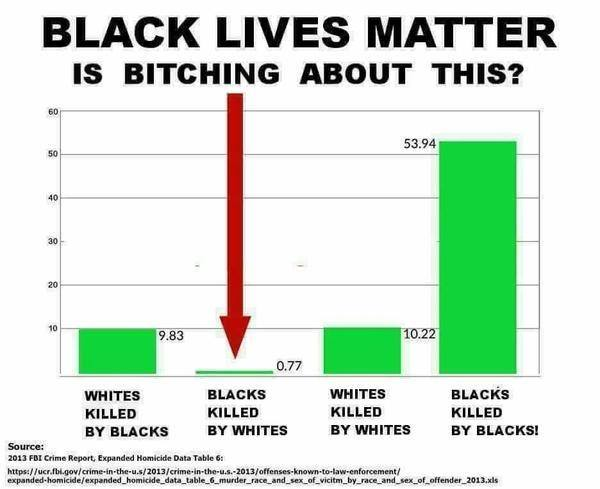
In 2019 police officers fatally shot 1,004 people, most of whom were armed or otherwise dangerous. African-Americans were about a quarter of those killed by cops last year (235), a ratio that has remained stable since 2015. That share of black victims is less than what the black crime rate would predict, since police shootings are a function of how often officers encounter armed and violent suspects. In 2018, the latest year for which such data have been published, African-Americans made up 53% of known homicide offenders in the U.S. and commit about 60% of robberies, though they are 13% of the population.

ADVERTISEMENT

The police fatally shot nine unarmed blacks and 19 unarmed whites in 2019, according to a Washington Post database, down from 38 and 32, respectively, in 2015. The Post defines “unarmed” broadly to include such cases as a suspect in Newark, N.J., who had a loaded handgun in his car during a police chase. In 2018 there were 7,407 black homicide victims. Assuming a comparable number of victims last year, those nine unarmed black victims of police shootings represent 0.1% of all African-Americans killed in 2019. By contrast, a police officer is 18½ times more likely to be killed by a black male than an unarmed black male is to be killed by a police officer.

On Memorial Day weekend in Chicago alone, 10 African-Americans were killed in drive-by shootings. Such routine violence has continued—a 72-year-old Chicago man shot in the face on May 29 by a gunman who fired about a dozen shots into a residence; two 19-year-old women on the South Side shot to death as they sat in a parked car a few hours earlier; a 16-year-old boy fatally stabbed with his own knife that same day. This past weekend, 80 Chicagoans were shot in drive-by shootings, 21 fatally, the victims overwhelmingly black. Police shootings are not the reason that blacks die of homicide at eight times the rate of whites and Hispanics combined; criminal violence is.

The latest in a series of studies undercutting the claim of systemic police bias was published in August 2019 in the Proceedings of the National Academy of Sciences. The researchers found that the more frequently officers encounter violent suspects from any given racial group, the greater the chance that a member of that group will be fatally shot by a police officer. There is “no significant evidence of antiblack disparity in the likelihood of being fatally shot by police,” they concluded.

A 2015 Justice Department analysis of the Philadelphia Police Department found that white police officers were less likely than black or Hispanic officers to shoot unarmed black suspects. Research by Harvard economist Roland G. Fryer Jr. also found no evidence of racial discrimination in shootings. Any evidence to the contrary fails to take into account crime rates and civilian behavior before and during interactions with police.

ADVERTISEMENT

The false narrative of systemic police bias resulted in targeted killings of officers during the Obama presidency. The pattern may be repeating itself. Officers are being assaulted and shot at while they try to arrest gun suspects or respond to the growing riots. Police precincts and courthouses have been destroyed with impunity, which will encourage more civilization-destroying violence. If the Ferguson effect of officers backing off law enforcement in minority neighborhoods is reborn as the Minneapolis effect, the thousands of law-abiding African-Americans who depend on the police for basic safety will once again be the victims.

The Minneapolis officers who arrested George Floyd must be held accountable for their excessive use of force and callous indifference to his distress. Police training needs to double down on de-escalation tactics. But Floyd’s death should not undermine the legitimacy of American law enforcement, without which we will continue on a path toward chaos.

Ms. Mac Donald is a fellow at the Manhattan Institute and the author of “The War on Cops,” (Encounter Books, 2016).

POPULAR ON WSJ.COM
BACK TO TOP
WSJ Membership Benefits
Customer Center
Legal Policies
©2020 Dow Jones & Company, Inc.
All Rights Reserved.