1cc=1ml so 5cc=5ml
100drops is 1 teaspoon
100drops is 1 teaspoon
Converted conversions
Okay



600 Drops per oz so 10 drops of hardener per ounce of resin is about 98% resin and 2% hardener. 20 drops per cc 10cc is 200drops 10cc catalyst+1quart(32oz)resin Resinp
600 Drops per oz so 10 drops of hardener per ounce of resin is about 98% resin and 2% hardener.
20 drops per cc 10cc is 200drops
10cc catalyst+1quart(32oz)resin Resinp
Ways to build relationships
RELATIONSHIPSDATINGTEN TIPS FOR HAPPY DATINGTEN TIPS FOR HAPPY DATING
When you think of dating happily, you may think of spending time with an interesting and neat person, doing lots of fun and exciting things together, and connecting intimately. Yet those are only a few of the things that go into a groovy dating experience.

Credit: “April 4, 2009: Ride Training,” © 2009 Mr. Christopher Thomas, used under a Creative Commons Attribution 2.0 Generic license: http://creativecommons.org/licenses/by/2.0/legalcode
Here are ten more things that, although they may not pop immediately to mind, are also keys to having rewarding and fun dating experiences:
Be realistic: If you’re looking for the perfect date or mate or state, you’re in trouble for two reasons: First, perfection is unlikely, if not impossible. Second, if a perfect person were to exist, he or she would most likely be looking for a perfect person, too.
So ask yourself about your expectations: Are you being reasonable? Are you asking too much of yourself, too much of your date, or too much of the situation? Best friends are really helpful in the reality check department, so when in doubt, it’s okay to say, “Am I being realistic here, or have I overdosed on romance pills?”
Be specific: Often, when people talk about the opposite sex, they either go all gooey and soft focus or become harsh and judgmental. Neither stance is particularly helpful. Look carefully at the details. Being specific is one of the best ways not only to problem-solve but to be realistic as well.
Take responsibility: All of us make mistakes — sometimes because we’re thoughtless, sometimes because we’re clueless, often out of ignorance. But when it’s clear you blew it, even though every instinct is saying play dumb, accept responsibility.
Be active: Don’t wait for someone to call you. Either make the call, take a walk, scrub the floor, scrape gum off your shoes, or jog. Don’t wait for someone else to make your day or make you happy or get the ball rolling. This is your life, not a dress rehearsal.
Don’t settle: A life is a series of compromises — going left when you wanted to go right because the taxi cut you off, taking the chicken on the buffet table because the prime rib was all gone, going to the prom with your best friend because you thought your dream date would turn you down.
There’s nothing bad or wrong about being flexible. The trick is knowing when to compromise and when to go for it.
To do that, you have to know what’s really important to you, and once you know that, don’t settle. If you don’t have what you want, make sure you do know what you want — being both realistic and specific — and then go for it. You can always reevaluate. What most people regret is not the mistakes they made but the chances they didn’t take.
Reevaluate often: Something that made you happy or behavior that pleased you or someone who rang your chimes once may or may not be in for the long haul. The only way of knowing the short term from the long term is to be willing to take your own emotional pulse from time to time.
Write stuff down: A log (not a Captain James T. Kirk kind of log, but a feelings log) can be really useful and helpful to pinpoint important times, beginnings of issues, and changes in the relationship.
It’s a great way to keep us honest and focused, and as long as you don’t leave it around for someone to find and read, there is no downside here. A log also is a way of taking responsibility privately so we can practice before we take it publicly.
Be creative: You’re not like anybody else on the planet, and neither is your date, so why do the two of you have to follow anybody else’s rules or precedents about what you want, how you act, where you go, or how you communicate? If it’s okay with the two of you — and it’s not illegal — then why not?
Be aware: Pay attention to your date and to your own responses. You don’t have to constantly monitor as though your date were in dating ICU and liable to expire at any moment, but be willing every once in a while to step out a bit and see what’s going on.
How are you? How does the date seem to be doing? Are you happy? Is it fun? Are you being attentive? Do you need more sleep? Are your senses being dulled?
Being dense is a tough way to lead your life and dangerous when you’re dealing with someone else who wants you tuned in.
Analyze fear: It is impossible to be completely without fear, and that’s okay: Fear warns us. After all, it would be stupid to cross the street without looking or do a header off the Empire State Building.
We can look at our fear, our assumptions, our anger, our patterns and decide to try to do something different. The moment we do that, our fear no longer controls us. We’re in charge of our own life, and paradoxically, these moments are most likely to happen when we let another person into our intimate life.


FSM.Compact.Cancel
Text:CRL 19-165
NINETEENTH CONGRESS OF THE FEDERATED STATES OF MICRONESIA
THIRD SPECIAL SESSION, 2015 C.R. NO. 19-155
A RESOLUTION
Requesting the President of the Federated States of Micronesia to
terminate the Amended Compact of Free Association with the United
States of America, pursuant to section 441 of the Amended Compact,
such termination to take effect no later than 2018.
WHEREAS, the Amended Compact of Free Association was
entered into by the Federated States of Micronesia and the
United States of America with the intent of maintaining a close
and mutually beneficial relationship between our two nations;
and
WHEREAS, the United States derives many benefits from the
Amended Compact, not least of which is its exclusive control
over the military use of the Federated States of Micronesia’s
extensive territorial waters and airspace; and
WHEREAS, the recent words and deeds of United States
policymakers suggest they view the Amended Compact as an act of
charity by the United States rather than a treaty between two
sovereign nations; and
WHEREAS, the United States has abused its majority on the
US-FSM Joint Economic Management Committee (JEMCO) to force
through resolutions contrary to the interests of the Federated
States of Micronesia; and
WHEREAS, most recently, the United States members of JEMCO
have unilaterally made drastic cuts to the funding of the
C.R. NO. 19-155
College of Micronesia-FSM without prior discussion or
consultation with leaders of the Federated States of
Micronesia; and
WHEREAS, the United States Senate Committee on
Appropriations has recently recommended that the United States
Department of Homeland Security consider establishing a pre-
screening process and requiring advanced permission for
prospective travelers from the Federated States of Micronesia
and other Freely Associated States to enter the United States;
now, therefore,
BE IT RESOLVED that the Nineteenth Congress of the
Federated States of Micronesia, Third Special Session, 2015,
requests that the President of the Federated States of
Micronesia terminate the Amended Compact of Free Association
with the United States of America, pursuant to section 441 of
the Amended Compact, such termination to take effect no later
than 2018; and
25
C.R. NO. 19-155
BE IT FURTHER RESOLVED that certified copies of this
resolution be transmitted to the President of the Federated
States of Micronesia.
Date: 11/19/15 Introduced by: /s/ Isaac V. Figir
Isaac V. Figir
/s/ Bonsiano F. Nethon
Bonsiano F. Nethon
/s/ Robson U. Romolow
Robson U. Romolow
Mahalo
SIGNATURE:
Clifford "RAY" Hackett www.rayis.me RESUME: www.rayis.me/resume
I founded www.adapt.org in 1980 it now has over 50 million members.
$500 of material=World’s fastest hydrofoil sailboat. http://sunrun.biz
On Sat, Feb 18, 2017 at 1:13 PM, Ray Hackett <3659745> wrote:
Actual PDF doc: http://www.fsmcongress.fm/pdf%20documents/19th%20Congress/RESOLUTIONS/CR%2019-155.pdf
page PDF doc is linked from:
http://www.fsmcongress.fm/19th%20Congress/19th%20CFSM%20Resolutions.html
Mahalo
SIGNATURE:
Clifford "RAY" Hackett www.rayis.me RESUME: www.rayis.me/resumeI founded www.adapt.org in 1980 it now has over 50 million members.
$500 of material=World’s fastest hydrofoil sailboat. http://sunrun.biz
FSM.Compact.Cancel
Actual PDF doc: http://www.fsmcongress.fm/pdf%20documents/19th%20Congress/RESOLUTIONS/CR%2019-155.pdf
page PDF doc is linked from:
http://www.fsmcongress.fm/19th%20Congress/19th%20CFSM%20Resolutions.html
Mahalo
SIGNATURE:
Clifford "RAY" Hackett www.rayis.me RESUME: www.rayis.me/resume
I founded www.adapt.org in 1980 it now has over 50 million members.
$500 of material=World’s fastest hydrofoil sailboat. http://sunrun.biz
King Solomon summary

King Solomon – Biography
Chart of the Kings King Solomon – Biography God’s Judgment Regarding King Solomon
Previous King: David Next King: Rehoboam
Contents
Summary
Adonijah’s Rebellion
Solomon’s Wisdom
A Difficult Legal Case
Solomon’s Temple
The Queen of Sheba
Solomon’s Apostasy
For Discussion

Summary
The time of King David and King Solomon was the golden age of Israel. David’s military skill had relieved his kingdom from the constant threat of foreign invasion, and had established an empire over the surrounding region. Solomon’s diplomatic skill maintained this empire without the need for further war.
Solomon was prolific in art and science, having written three of the books of our modern Bible — the Song of Solomon, Ecclesiastes, and most of the Book of Proverbs. Early in his reign, God promised him great wisdom, and in fact his wisdom was legendary in his own time and today.
However, in spite of the great advantages of his heritage from David, wisdom from God, and the prosperity and security that resulted, late in life Solomon fell away from God and lived a life full of sin. As a result, the glory days of Israel were short-lived. As soon as Solomon died, the kingdom was split, Solomon’s heir King Rehoboam retaining the smaller portion, and both kingdoms experienced much trouble that resulted from Solomon’s sins.
Where to read Solomon’s story: 1 Kings 1 – 11; 1 Chronicles 29:21-25; 2 Chronicles 1 – 9
Adonijah’s Rebellion
When Solomon’s father King David was aging, he lost his mental sharpness, and his son Adonijah, securing the aid of David’s long time right hand man Joab, thought he would take the opportunity to seize the throne for himself. Years ago Adonijah’s older brother Absolom had died in an attempt to similarly seize the throne.
Adonijah held a coronation ceremony just outside the capital city, Jerusalem, inviting only his supporters and excluding those not in sympathy with his cause. There were sacrifices, chariots, pomp and circumstance, partying and shouts of “Long live King Adonijah!”
God had chosen Solomon to be David’s successor,1 and David had promised accordingly, but David’s declining awareness threatened to limit his ability to control who took his throne. During all Adonijah’s preparations, David never challenged his actions, and his supporters took this as evidence of David’s approval, or at least of his inability to object. But now the case was brought to David’s attention by Solomon’s supporters, his mother among them. David, coming to his senses, immediately named Solomon king and went into retirement himself — a very unusual arrangement, but one that secured Solomon’s successful ascension.
As Adonijah’s party returned to Jerusalem, they came upon another coronation ceremony — Solomon’s. Since this ceremony was fully endorsed by the king, Adonijah’s supporters recognized it as unstoppable, and immediately realized the treasonous nature of their own actions. In alarm, the guests dispersed to their homes.
It would have been normal for Solomon to execute Adonijah and Joab as conspirators and traitors to the throne. To save his life, Adonijah took hold of the LORD’s altar and refused to release it until Solomon promised to spare him; the altar was a customary place of refuge for those begging for mercy. Solomon freed Adonijah, with the stipulation that if he offended again, he would be executed for treason.
Some time later Adonijah petitioned for the hand of Abishag, a servant of dead King David, in marriage. In this request Solomon sensed the first steps of a future conspiracy — this marriage would raise Adonijah to a higher station, and was similar to the early steps in his brother Absolom’s rebellion. Upon this infraction, Solomon executed his sentence of death, previously stayed, upon Adonijah and Joab.
Source: 1 Kings 1 – 2
Note:
1 1 Chronicles 28:5
Solomon’s Wisdom
One night early in his reign, the LORD gave Solomon a dream. In the dream, God told Solomon to ask for something — anything he wanted.
Solomon, young and humble, spoke to God about the great responsibility involved in governing God’s people, and he asked for wisdom sufficient for the job.
The LORD was pleased with Solomon’s request. He could have asked for wealth, political or military security, long life or fame, but instead he asked for wisdom to carry out the responsibilities God had given him. And so God promised he would give Solomon exceptional wisdom, unlike anyone else before or after him, and he would also give him those things he hadn’t asked for — wealth, respect, security.
God kept his promise, for Solomon’s wisdom is legendary. He was recognized by his peers, the kings of surrounding kingdoms, as the wisest — wiser also than any philosophers famous in his day. He wrote 3,000 proverbs and 1,005 songs — a prolific output for any writer or musician. He was the acknowledged expert in botany and biology. He held seminars attended by cabinet members of kings from throughout the region. Even the Queen of Sheba, who traveled 1,000 miles to visit Solomon, was totally wowed by the magnificence of his operations.
Source: 1 Kings 3:1-15, 4:29-34; 2 Chronicles 1
A Difficult Legal Case
God had promised to give King Solomon exceptional wisdom. It wasn’t long before God’s promise was tested, and Solomon judged a court case of unusual difficulty. Two women, plaintiff and defendant, each had a baby. One baby had died, and each woman claimed to be the mother of the surviving infant.
Clearly one woman was lying, but which one? Any parent who has faced two children each saying “he did it” can appreciate the difficulty of Solomon’s position. And failure to provide justice in this difficult case would set the tone for the rest of his administration.
Solomon ordered that a sword be brought to the courtroom, and a murmur must have rumbled through the crowd. Then he ordered, “Cut the living child in half, and give one part to each woman!” The observers must have been stunned with the bloody cruelty of this court order.
The woman who had filed suit couldn’t bear to see her child killed. In a panic she immediately withdrew the suit, asking the king to judge in favor of her opponent, but spare the child’s life. The defendant, more interested in winning than in the child’s welfare, argued “I like the king’s decision — cut him in two!”
Immediately King Solomon stopped the proceedings, rescued the child, and ordered, “Give the living baby to the first woman — she is his mother!”
Solomon’s wisdom was immediately obvious to everyone present, and his reputation spread throughout the kingdom. God had indeed kept his promise.
Source: 1 Kings 3:16-28
Solomon’s Temple
King Solomon built many houses and palaces, gardens and parks, irrigation projects and public works. But the most famous of all his achievements was the temple that bore his name. For nearly 400 years Solomon’s Temple stood as the focal point for worship of the LORD.
The structure, though not over-large — it was about 90 feet by 30, and three stories high — was magnificent. King David, forbidden by God from building the temple, consoled himself by accumulating vast amounts of building materials, including timber, dressed stone, iron and bronze, silver and gold. Solomon followed this up with further imports of lumber and quarried stone. The amount was so great that, to transport the materials, Solomon conscripted a labor force of nearly 200,000 of his own people, not counting the workers of the foreign exporters. The temple’s interior walls were dressed with carvings of angels and nature scenes, and were plated with gold throughout — about 23 tons of it. Even with a huge staff of both paid and conscripted labor, its construction had taken seven years.
For the temple’s dedication, Solomon hosted a festival, inviting the entire nation. A great parade accompanied the ushering of the Ark of the Covenant from its tent to its new home in the temple’s inner sanctuary, the Holy Place. As the Ark was positioned in its place, the LORD showed his approval; the glory of the LORD, in the form of a cloud, at once dark and shining brightly, filled the temple. It was so intense the priests had to abandon their rituals and go outside.
Solomon preached sermons and prayed prayers, asking the LORD to be present in the temple, to use the temple to draw his people to faithfulness, and to bless all who worship him there.
When all was done, the LORD spoke to Solomon, promising that if his people were faithful, he would bless them, but if they turned to sin, he would destroy them. Even so, if they repented of their sin, he would bless them again, rescuing them from the troubles that resulted from their sin.
Source: 1 Kings 5 – 9; 2 Chronicles 2 – 7
The Queen of Sheba
God gave Solomon the great wisdom he had promised him. Solomon’s fame spread throughout the region, and the queen of Sheba, 1,000 miles to the south, was deeply impressed with the stories she heard. Resolving to pick Solomon’s brain, she gathered gifts fit for a king, assembled a caravan, and traveled to Jerusalem.
Solomon met her. She asked all her difficult questions, and Solomon answered them all to her satisfaction. Furthermore, the queen was overcome with awe for Solomon’s wealth, vast dominion and smooth-running administration. The king gave her gifts fit for a queen, and she returned home.
It was this visit to which Jesus later referred when he said, “The queen of the south shall rise up in the judgment with this generation, and shall condemn it: for she came from the uttermost parts of the earth to hear the wisdom of Solomon; and, behold, a greater than Solomon is here.”1
Source: 1 Kings 10:1-13; 2 Chronicles 9:1-12
Note:
1 Matthew 12:42, Luke 11:31
Solomon’s Apostasy
Though Solomon had long been faithful to the LORD, late in life he fell away.
Part of Solomon’s diplomatic success had come through marriages with foreign royalty. In all, he had 1,000 wives, many of them foreign. The LORD had forbidden his people to marry foreigners,1 for fear their religious practices would corrupt the true worship of the LORD. And in fact, this is what happened to Solomon.
Out of love for his wives, Solomon built shrines to their idols. To please his wives, he personally participated in the worship of those idols. This was no small sin, nor a positive expression of religious freedom. Each of these idols was connected with detestable practices. For example, both of the idols Chemosh and Molech required human sacrifice of children or infants in their worship.
And so Solomon, previously pure and committed to the LORD, introduced much sin into Israel in the name of political success. And this apostasy came in spite of God’s great blessing to Solomon — God had personally spoken to him on two occasions, and had given him great wisdom, wealth, and security.
For this apostasy, God told Solomon he had decided to remove him from being king. Yet out of respect for Solomon’s father, faithful King David, he would not do this during Solomon’s lifetime, nor would he remove him completely — Solomon’s heir would retain a small portion of the kingdom. This was fulfilled when Solomon’s son King Rehoboam foolishly lost most of the kingdom.
Source: 1 Kings 11
Note:
1 Deuteronomy 7:3-4
For Discussion
God offered Solomon the chance to ask God for anything he wanted. Ignoring the things a king might want — wealth, respect, security, health — Solomon asked instead for wisdom, so he could carry out the responsibilities God had given him. God was pleased with this request.
What kinds of things do we usually pray for?
In spite of Solomon’s great wisdom, and his multiple communications from God — desired by all who love God — Solomon turned to a life of sin. Do wisdom or communications from God guarantee our faithfulness?
God appeared to Solomon three times — at the beginning, the middle, and the end of his time as king. The first time, God said, “Solomon, ask me for something good.” Solomon asked for wisdom, and God was pleased. The second time, God promised Solomon that if he remained faithful, his kingdom would be secure, but if he abandoned God, he would lose his kingdom. The third time, God told Solomon that because he had abandoned God, he would lose the kingdom.
God has made us wonderful promises, if we remain faithful to him. What will we choose?
Hosted by Alan’s Gleanings
Gmail search examples
Gmail Help
GMAILFORUM
Search operators you can use with Gmail
You can use words or symbols called search operators to filter your Gmail search results. You can also combine operators to filter your results even more.
How to use a search operator
Open Gmail.
In the search box, type the search operator.
Search operators you can use
Tip: Once you do a search using search operators, you can use the results to set up a filter for these messages.
What you can search by Search operator & example
Specify the sender
From:
Example: from:amy
Specify a recipient
To:
Example: to:david
Words in the subject line
Subject:
Example: subject:dinner
Messages that match multiple terms
OR or { }
Example: from:amy OR from:david
Example: {from:amy from:david}
Remove messages from your results
–
Example: dinner -movie
Find messages with words near each other. Use the number to say how many words apart the words can be
AROUND
Example: dinner AROUND 5 friday
Messages that have a certain label
Label:
Example: label:friends
Messages that have an attachment
Has:attachment
Example: has:attachment
Messages from a mailing list
List:
Example: list:info
Attachments with a certain name or file type
Filename:
Example: filename:pdf
Example: filename: homework.txt
Search for an exact word or phrase
" "
Example: "dinner and movie tonight"
Group multiple search terms together
( )
Example: subject:(dinner movie)
Messages in any folder, including Spam and Trash
In:anywhere
Example: in:anywhere movie
Search for messages that are marked as important
is:important
label: important
Example: is:important
Starred, unread, or read messages
is:starred
is:unread
is:read
Example: is:read is:starred
Messages that include an icon of a certain color
has:yellow-star
has: blue-info
Example: has:purple-star
Recipients in the cc or bcc field
cc:
bcc:
Example: cc:david
Note: You can’t find messages that you received on bcc.
Search for messages sent during a certain time period
after:
before:
older:
newer:
Example: after:2004/04/16
Example: before:2004/04/18
Search for messages older or newer than a time period using d (day), m (month), and y (year)
older_than:
newer_than:
Example: newer_than:2d
Chat messages
Is:chat
Example: is:chat movie
Messages delivered to a certain email address
Deliveredto:
Example: deliveredto:username
Messages in a certain category
Category:
Example: category:updates
Messages larger than a certain size in bytes
Size:
Example: size:1000000
Messages larger or smaller than a certain size in bytes
larger:
smaller:
Example: larger:10M
Results that match a word exactly
+
Example: +unicorn
Messages with a certain message-id header
Rfc822msgid:
Example: rfc822msgid:200503292
Messages that have or don’t have a label
has:userlabels
has:nouserlabels
Example: has:nouserlabels
Note: Labels are only added to a message, and not an entire conversation.
Was this article helpful?
YESNO
©2017 Google Privacy Policy Terms of Service Program Policies

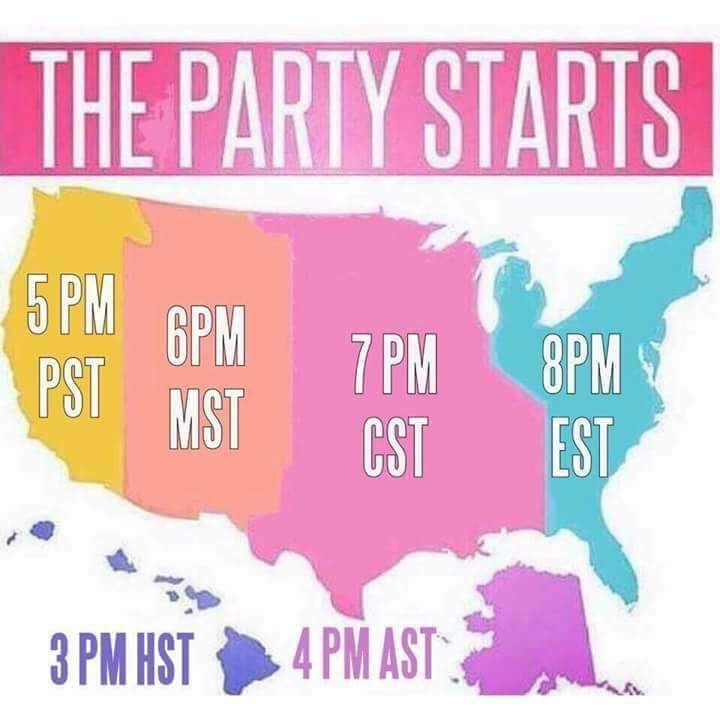
USA time zones map
 Solar
Solar 