https://www.france24.com/en/20201001-covid-19-test-caused-brain-fluid-leak-in-us-patient-study
Monthly Archives: January 2021
Candace Owens 01/ 14/ 2021
Now that the FBI has announced publicly that the “insurgency”at the U.S. Capitol was a pre-planned attack, ALL MEMBERS of CONGRESS,(all Democrats & some Republicans), that took part In that sham of an impeachment yesterday owe President Trump & his family, 75 million Patriotic supporters and really all of America a MASSIVE APOLOGY!
All of the millions of vengeful, disgusting members of the Media and Social Media who took their lead from Nancy Pelosi and Congressional Democrats and stood before the world and LIED about the events of that day should be really ashamed!
It is now known that the Capitol Police had prior knowledge of this planned attack, provided to them by the FBI in the days leading up to the Jan.6 event. Capitol Police then appropriately notified the Congressional Sgt-at-Arms, (who reports directly to Pelosi), and at that time Capitol Police also requested NG presence. In fact, CP asked Pelosi and Mayor Bowser numerous times to call up NG for support and were turned down. Why? Reportedly, Pelosi, the DC Mayor, Schumer and others thought the “OPTICS WOULD BE BAD”????
Pelosi and others apparently knew in advance of the “attack”and It appears that this “insurgence” and the tragic events that followed were used by Pelosi & others as just one more last-ditch attempt by DC Democrats to damage President Trump’s name & legacy!
We now know the reason Pelosi rushed forward with that phony impeachment, before the facts had time to come out!
The members of Congress who stood and said the most vile things imaginable, in a public hearing, about our President showed the world just what despicable human beings some Americans can be. It was irresponsible of them to rush to judgement based on events that apparently were engineered/used by Nancy Pelosi and other Democrats in Congress in an attempt to ruin an honest, decent American’s life. I hope they pay a serious price, including removal from office. Democrats in America have become very dangerous people and the hate they harbor for those they consider to be“weak” is like nothing I’ve ever seen before. Their lust for power is just beyond comprehension.
Fortunately for Americans, though, the Democrats’ underhanded tactics have once again been unable to get the better of Donald J. Trump. Again, in this the final week of his successful term, he comes out the winner yet again!
For more than four years, Pelosi,Schumer and the DC Democrats have tried time and time again to “get” Donald Trump and bring him down. He has been forced to endure Investigations that went on for months & months, (costing untold millions in taxpayer dollars), two impeachments based on fabricated “evidence” along with unrelenting lies and other “charges”, yet he maintains his dignity, holds his head up high, and continues to go out every day and do the job he was elected to do. There has never been a finer President than Donald J. Trump. Thank you, Sir, for restoring Greatness to America!♥️
WE LOVE YOU!! 🇺🇸♥️🇺🇸
Guam title 21 law
COL120106
21 GCA REAL PROPERTY
CH. 62 SUBDIVISION LAW
1
CHAPTER 62
SUBDIVISION LAW
Article 1. General Provisions.
Article 2. Procedure for Subdividing Land.
Article 3. Lot Parcelling and Agricultural Subdivisions.
Article 4. Requirements for Plans and Maps.
Article 5. Improvements.
Article 6. Variances and Appeals.
Article 7. Penalties, Amendments, Interpretation and Separability.
ARTICLE 1
GENERAL PROVISIONS
§ 62101. Title.
§ 62102. Purpose and Intent.
§ 62103. Compliance with Master Plan.
§ 62104. Exemptions: Decedents’ Estates: Parental Division of Property.
§ 62105. Definitions.
§ 62106. Authority of the Commission.
§ 62107. Commission Approval.
§ 62108. General Requirements for Subdivisions.
§ 62108.1.Agricultural Subdivision Requirements.
§ 62109. Subdivision Located Without the Territorial Confines of Guam.
§ 62110. Subdivision Application, Verification of.
§ 62111. Government Subdivisions.
§ 62112. Public Rights of Way.
§ 62101. Title.
This Chapter shall be known The Subdivision Law.
SOURCE: GC ‘18000.
§ 62102. Purpose and Intent.
The purpose of this Chapter and of any rules, regulations,
specifications and standards adopted, pursuant thereto, is to control and
regulate the development and/or subdivision of any land for any purpose
whatsoever. Such control and regulations is determined to be necessary to
COL120106
21 GCA REAL PROPERTY
CH. 62 SUBDIVISION LAW
2
provide for the orderly growth and harmonious development of the territory;
to insure adequate traffic circulation through coordinated street, road and
highway systems; to achieve individual property lots of maximum utility
and livability; to secure adequate provisions for water supply, drainage,
sanitary sewerage and other health requirements; to permit the conveyance
of land by accurate legal description; and to provide logical procedures for
the achievement of this purpose.
SOURCE: GC ‘18001 as amended by P.L. 12-90.
§ 62103. Compliance With Master Plan.
Development and/or subdivision of all land and roads shall conformto
that land use or road location delineated in the latest revision of the
Territorial Master Plan, initially approved in April 1967.
(a) Construction on land designated for future road or public purposes,
contrary to the use indicated in the Master Plan, shall not be authorized,
irrespective of land ownership.
(b) Specifications for construction, repair, and/or reconstruction of
roads shall conform to Department of Public Works Standards, and shall
follow requirements delineated for that zone in which the subdivision or
construction is located.
SOURCE: GC ‘18001.1 enacted by P.L. 12-90.
AG OPINION: Even though the 1967 Master Plan was never adopted by the
Legislature prior to the enactment of P.L. 12-20, the enactment of this § 62103 has the same
effect– requiring compliance with the Plan. BOP 90-0321 (4/19/90).
§ 62104. Exemptions: Decedents’ Estates: Parental Division of
Property.
(a) Article 5 of this Chapter shall not apply to land which is an asset of
the estate of decedent, provided, however, that, before the distribution of
any such land by the court, the Territorial Planner or Commission may enter
his or its appearance and require street and utility easements on said land to
insure lot divisions consistent with the general plan and with the provisions
of § 62501.
(b) Article 5 of this Chapter shall also not apply to land which has been
owned in fee simple by a person who divides said land among his living
children or their descendants by way of inter-vivos gift; provided, however,
that such land shall be deeded to said children or descendants in fee simple
and said deeds shall contain alienation clauses to the effect that the children
COL120106
21 GCA REAL PROPERTY
CH. 62 SUBDIVISION LAW
3
or descendants shall not give, sell, or convey in fee simple such lots for a
period of at least five (5) years; and further provided, that the Territorial
Planner or Commission shall require street and utility easements on said
land to insure lot divisions consistent with the general plan and that the
minimum size of each lot, including that retained by the grantor, if any,
shall be no less than seven thousand two hundred (7,200) square feet.
Where the streets and alleys have not been improved within the subdivision,
the subdivider, for the purposes of having his subdivision map approved
and recorded by Land Management, shall be required either to secure a
bond for the said improvement, or to sign an affidavit stating to the effect
that the said improvement shall be accomplished within a reasonable period.
The government of Guam shall not be held responsible for making the said
improvement. The deed transferring the property may provide that the
children or descendants may mortgage the property for the purpose of
constructing a residence on the property.
SOURCE: GC ‘18001.5 amended by P.L. 11-125; P.L. 13-153:1; subdivision (b)
amended by P.L. 15-131:5. Subsection (b) amended by P.L. 21-144:9(a) (12/29/92).
Subsection (b) amended by P.L. 22-153:1(b) (12/30/94).
§ 62105. Definitions.
The following words and phrases, when used herein, shall have the
meaning respectively hereto ascribed to them, except where a different
meaning may be clearly indicated by the context:
(a) Agricultural Subdivision shall mean a subdivision having no lots,
parcels or sites smaller than ten thousand (10,000) square feet, except when
located on top of the Northern Aquifer, the minimum ten thousand (10,000)
square foot lot must be connected to a public or other EPA-approved sewer
system, and in which all lots, parcels or sites are used principally for
agriculture, single family resident sites or as an agriculture-homesite
combination; except that the term Agricultural Subdivision shall include a
subdivision resulting from distribution by the court pursuant to § 62104(a)
or (b) of this Chapter with no lots, parcels or sites smaller than ten thousand
(10,000) square feet, with sewer connection or other EPA-certified sewage
disposal only if located over the Northern Aquifer, and in which all lots,
parcels or sites are used principally for agriculture, single family sites, or as
an agricultural homestead combination
(b) Commission shall mean the Territorial Land Use Commission.
COL120106
21 GCA REAL PROPERTY
CH. 62 SUBDIVISION LAW
4
(c) Easement shall mean a grant by the owner of land for a specified
use or uses of said land to a person or persons, to the public generally, or to
the government of Guam.
(d) Engineer shall mean a person who is registered pursuant to Title
XLIII, Government Code of Guam, as an Engineer, and holds a current
certificate of registration issued by the Board of Engineering and
Architectural Examiners or a person exempted under the provisions of said
Title XLIII.
(e) Improvements shall mean any beneficial or valuable site additions
or alterations to a subdivision property including street grading and
surfacing, water service, sanitary sewers, facilities provided for drainage
and site grading.
(f) Non-Access Reservation shall mean the limiting of access between a
right-of-way and the adjacent land. (A non-access reservation shall be
provided only when required by the Commission and the right of access to
and from such land across the right-of-way boundary shall be dedicated to
the government of Guam.)
(g) Plan, General shall mean the general plan or plans for guiding the
physical development of the territory of Guam as adopted by the
Commission and approved by the Governor.
(h) Plan, Precise shall mean the detailed plan or plans for guiding and
controlling the physical development of specific projects as adopted by the
Commission and approved by the Governor.
(i) Planning Division shall mean the Planning Division of the
Department of Land Management.
(j) Record Map shall mean the final subdivision map designed to be
placed on record in the Land Records of the Department of Land
Management.
(k) Reservation shall mean an area of land which the subdivider
reserves free and clear of all structures for a future specified purpose.
(l) Resubdivision shall mean the resubdividing of land in a subdivision
or lot parcelling subdivision or portions thereof so as to create a new or
different subdivision of such land other than is presently or record, and shall
include modifications to lot lines, the creation of one or more additional lots
or any other action of land division which is not consistent with the
recorded subdivision or lot parcelling subdivision map.
COL120106
21 GCA REAL PROPERTY
CH. 62 SUBDIVISION LAW
5
(m) Reversion to Acreage shall mean the voiding of a previous
subdivision in order to revert the platted lots contained therein back to the
original parcel or parcels which existed prior to the subdivision.
(n) Right-of-Way shall include the entire width between property lines
of a highway, street or alley.
(o) Sanitation Division shall mean the Sanitation Division of the
Department of Public Health and Social Services.
(p) Subdivide shall mean the act of creating a subdivision.
(q) Subdivider shall mean any individual, firm, association, syndicate,
corporation, trust or any other legal entity proceeding to effect a subdivision
of land for himself or another.
(r) Subdivision shall mean the division of any parcel of land into six (6)
or more lots. Subdivision shall include resubdivision and reversion to
acreage and, where appropriate to context, relates to the process of
subdividing or to the land subdivided regardless of the method used to
accomplish such action, whether by sale, design, rent, lease, deed of gift,
grant in gift or any other method of transferring title whether for
renumeration or not and whether immediate or future.
(s) Subdivision, Lot Parcelling shall mean the division of a lot legally
existing on the effect date of this Chapter into no more than five (5) parcels.
Lot parcelling of a lot shall include all methods of such action whether by
sale, design, rent, lease, deed of gift, grant in gift or any other method of
transferring title whether for renumeration or not and whether immediate or
future.
(t) Surveyor shall mean a person who is registered pursuant to Title
XLIII, Government Code of Guam, as a land surveyor, and holds a current
certificate of registration issued by the Board of Engineering and
Architectural Examiners or a person exempted under the provisions of said
Title XLIII.
(u) Tentative Map shall mean a preliminary subdivision map of the
purpose of showing the design of a proposed subdivision and the existing
conditions in and around it.
(v) Territorial Planner shall mean the Chief of Planning Division,
Department of Land Management, Government of Guam.
COL120106
21 GCA REAL PROPERTY
CH. 62 SUBDIVISION LAW
6
 Territorial Surveyor shall mean the person designated as the
Territorial Surveyor by the Director of Land Management.
SOURCE: GC ‘18002. Subsection (a) amended by P.L. 13-153:2, P.L. 14-145:9; and
P.L. 15-57:8; further amended by P.L. 21-144:9(b) (12/29/92). Subsection (a)
amended by P.L. 22-161:5 (12/30/94); further amended by P.L. 23-59:2.
§ 62106. Authority of the Commission.
The Commission shall have jurisdiction and cognizance of all matters
relating to subdividing and subsequent development of land within the
territory. The Commission shall prescribe and adopt such rules and
regulations, which shall include, but not be limited to, specifications and
standards for development of subdivisions, as are, in its judgment,
necessary to effectuate the purposes and intent of this Chapter. Such rules
and regulations may provide for delegation of functions of review and
inspection of proposed, tentative and final plans and maps, and of
subdivisions, to other agencies and departments of the government. Such
rules and regulations shall become effective upon approval by the
Governor.
SOURCE: GC ‘18003.
§ 62107. Commission Approval.
No subdivision map presented for filling as a record in the Department
of Land Management shall be recorded without the prior approval of the
Commission. The Commission shall not approve the record map of a
subdivision unless such map conforms to all the requirements of this
Chapter and any applicable rules, regulations, specifications or standards
adopted by the Commission. No subdividers shall subdivide any land except
in accordance with this Chapter, or sell, lease or assign, or offer for sale,
any subdivision or a proposed subdivision or any part thereof, or any lot,
parcel to site therein until the record map has been officially recorded.
SOURCE: GC ‘18004.
§ 62108. General Requirements for Subdivisions.
In all subdivisions presented for recording under this Chapter the
subdivider shall:
(a) Not subdivide or develop land for any purpose contrary to the
provisions of the Zoning law, Chapter 61 of this Title of the Guam Code
Annotated.
COL120106
21 GCA REAL PROPERTY
CH. 62 SUBDIVISION LAW
7
(b) Cause every lot to abut a roadway right-of-way having a minimum
width of forty (40N) feet; provided, however, that in agricultural
subdivisions and in parental subdivisions, every lot shall abut a roadway
right-of-way having a minimum width of twenty (20N) feet.
(c) Except as may be provided for pursuant to ‘56111, Title 5, Guam
Code Annotated, provide for the installation of power, water and telephone
lines, fire hydrants, roads and highways within the subdivision in accord
with any general or precise plan approved by the Commission.
(d) Where an established framework of local streets exists, provide for
the uniformity of street widths and alignment thereto with the streets of the
subdivision, and for the continuation of existing street names.
(e) Provide for adequate light, air privacy on all lots regardless of land
use, and design the location of streets to prevent excessive grading and
scarring of the landscape.
(f) Provide sufficient drainage of the land to provide reasonable
protection against flooding.
(g) Provide that streets within residential areas shall not be planned for
through traffic in order to insure privacy and safety.
(h) In cases where public access is not already provided, dedicate land
for public access by right-of-way for pedestrian travel from a public
highway or public street to abutting lands below the high-water mark on any
coastal shoreline, and to dedicate land for public access by right-of-way
from a public highway or public street to abutting public lands in the hills
and jungle so such lands shall be accessible for hiking, hunting, fruit-
picking and other recreational purposes.
The right-of-way shall be clearly designated on the final map of the
subdivision or development upon the dedication of land for a right-of-way
as required by this Subparagraph and acceptance by the Territory, the
Territory shall thereafter assume the cost of improvements for and the
maintenance of the right-of-way, and the subdivider shall accordingly be
relieved from such costs.
SOURCE: GC ‘18005. Subsection (b) amended by P.L. 10-157; (h) added by P.L. 13-
69:2. Subsection (b) amended by P.L. 21-130:10 and P.L.25-011:11.
§ 62108.1. Agricultural Subdivision Requirements.
(a) Any person or persons subdividing agriculturally-zoned land into
six (6) or more lots, parcels or sites that are less than twenty thousand
COL120106
21 GCA REAL PROPERTY
CH. 62 SUBDIVISION LAW
8
(20,000) square feet per lot with the intention of selling three (3) or more of
the subdivided lots shall be required to make improvements consistent with
§ 62108 of Title 21 of the Guam Code Annotated.
(b) In agricultural subdivisions with lots, parcels or sites less than
twenty thousand (20,000) square feet, when located over the Northern
Aquifer, all lots must meet the requirements set forth in _3219(c) of Chapter
3 of Title 18 of the Administrative Rules and Regulations of the
government of Guam before final approval on adequate lot sizes can be
given.
(c) Agricultural subdivisions are permitted in Zoning District 2-Low
Intensity of the Zoning Code of Guam.
SOURCE: Added by P.L. 22-161:5(b) (12/30/94). Amended by P.L. 23-59:3.
Subsection (b) amended by P.L. 25-011:12. Subsection (c) added by P.L. 25-011:13.
§ 62109. Subdivision Located Without the Territorial Confines of
Guam.
No person subject to the licensing provisions of 21 GCA Chapter 100
(Real Estate Law) shall sell or lease nor offer to sell or lease any interest in
a subdivision located without the territorial confines of Guam unless the
subdivision plan has been submitted to and approved by the Real Estate
Commissioner. The Commissioner shall not approve any plan for a
subdivision located without the territorial confines of Guam until he has
issued a public report on the subject property. Such public report may be
issued by the Commissioner based on facts disclosed from the state in
which the property is located or based on an independent investigation on
the part of the Commissioner. Approval of a subdivision located without the
territorial confines of Guam by the Commissioner shall not relieve any
person from any further requirement for registration or regulation of such
transaction provided elsewhere under the laws of Guam.
SOURCE: GC ‘18006 enacted by P.L. 13-191:1.
§ 62110. Subdivision Application, Verification of.
Any subdivision application provided for by this Chapter shall not be
accepted or approved by the Commissioner unless it shall be certified under
penalty of perjury or verified before a notary public or other officer
qualified to administer oaths. Such certification or verification shall extend
to the documents and supplemental materials as well as to the statements
contained in the application itself.
COL120106
21 GCA REAL PROPERTY
CH. 62 SUBDIVISION LAW
9
SOURCE: GC ‘18007 enacted by P.L. 13-191:1.
§ 62111. Government Subdivisions.
In any subdivision of government of Guam land, including land of
autonomous agencies, in which there are more applicants for lots within the
subdivision than there are lots, the Director of Land Management shall
conduct a public lottery, under the direction of the Attorney General, among
those applicants holding the same priorities to determine which applicants
of equal priority obtain the lots.
SOURCE: Added by P.L. 21-14:17.
§ 62112. Public Rights of Way.
(a) The public shall have the right to pass unhindered over a Public
Right of Way. For the purposes of this Chapter, a Public Right of Way
includes (1) easements for roadways created by law or operation of law; (2)
those subdivision easements, access, or rights of way created by delineation
on approved maps, way of formal grants or dedication of easement, access,
or right of way, regardless of formal acceptance by the government; and (3)
those rights of way mandated by the Subdivision Law within a subdivision
or lot parceling which appear on an approved final subdivision or lot
parceling map as dedicated easements, dedicated access, rights of way, or
roadways.
(b) The signature of the owner and approval of the Department of Land
Management on a final subdivision or lot parceling map delineating an
easement, access, roadway, or right of way, thereby grants to the public the
right to pass unhindered over that public right of way.
(c) The Department of Public Works shall have oversight responsibility
for the development of public rights of way through the Highway
Encroachment permitting process. However, such oversight responsibility
notwithstanding, the Government of Guam shall in no way be encumbered
to develop this roadway. The obligation to develop the roadway shall
remain with the subdivider as provided in Ԥ 62501 of this Chapter.
(d) A public right of way serves the public and all the landowners
whose properties abut the easement, and the subdivider shall in no way
retain special property rights that would allow him to encroach upon,
obstruct, place obstructions upon, hinder passage over, place signs upon, or
hinder maintenance of the public right of way.
COL120106
21 GCA REAL PROPERTY
CH. 62 SUBDIVISION LAW
10
(e) The subdivider shall in no way retain special property rights that
would allow him to charge fees for passage or otherwise, that would allow
him to prohibit, and therefore, discriminate against, any member of the
public from using the public right of way.
(f) The subdivider shall in no way retain special property rights that
would allow him to grade, change water courses upon, or modify the
topography and roadway elevation of the public right of way without the
prior written authorization from the Department of Public Works.
(g) The subdivider shall in no way retain special property rights that
would allow him to use any portion of the public right of way to meet set-
back or other zoning requirements.
(h) In subdivisions approved since 1975 where the subdivider has not
opened, improved, or established a public access road, any landowner
whose property is served by the public right of way may, with the express
written authorization of the Department of Public Works, take necessary
and reasonable measures to make the public right of way passable for
ingress and egress to his property. The subdivider shall in no way retain
special property rights that would allow him to obstruct the lawful
development of this public right of way.
(i) In subdivisions where the subdivider or the government has not
maintained the public right of way, any landowner whose property is served
by that right of way may take the necessary and reasonable measures to
maintain that portion of the easement that immediately abuts his property.
Reasonable maintenance is herein defined as cutting brush, mowing
vegetation, filling potholes, and removing rocks and other obstructions to
passage; it does not include grading or otherwise changing the topography
or elevation of the roadway
SOURCE: Added by P.L. 27-118:2.
military demographics
Demographics of the U.S. Military

Today, women represent 16 percent of the enlisted forces and 19 percent of the officer corps. Ismael Ortega/U.S. Air Force via Reuters
Deployed around the world, the armed forces are a pillar of U.S. power and influence abroad. But many civilians are unfamiliar with their composition. How much does the military resemble U.S. society?
Backgrounder by CFR.org Editors
Last updated July 13, 2020
Introduction
The U.S. military has taken significant steps over the past decade to build a more diverse and inclusive force that attracts the country’s top talent. In particular, the services have opened more doors for women in recent years, ending restrictions on combat roles. However, women and racial and ethnic minorities remain underrepresented in parts of the military, particularly at the highest levels of leadership. The military has also opened its ranks to openly gay individuals, but it has maintained broad prohibitions on those who are transgender.
What are the military services?
The organizational structure of the U.S. military is complex. The Department of Defense has three military departments—Army, Navy, and Air Force—but there are six armed services. The Army is organized within its own department, while the navy and Marine Corps both fall under the Department of the Navy, and the Air Force and the newly established Space Force are services within the Department of the Air Force.
The Coast Guard is by law “a military service and a branch of the armed forces” but is part of the Department of Homeland Security. That is because the coast guard is predominately a law enforcement agency, although it does deploy with the navy and marine corps on certain missions. Collectively, the three maritime forces are sometimes called the sea services.
Daily News Brief
A summary of global news developments with CFR analysis delivered to your inbox each morning. Most weekdays.
Email Address
Additionally, there are seven reserve military forces [PDF], which will not be discussed here.
How big are the military services?
The United States ended the draft for military service in 1973, transitioning to the all-volunteer force that exists today. At that time, the active component of the military, excluding the coast guard, comprised 1.9 million men and women, or about 1 percent of the population. Now, there are about 1.3 million active-duty personnel, or less than one-half of 1 percent of the U.S. population.
More From Our Experts
Paul B. Stares
Conflicts to Watch in 2021
Max Boot
Iran-Backed Militias in Iraq Poised to Expand Influence
Sheila A. Smith
Beginning the Post-Abe Era
The army is the largest U.S. military service, followed by the navy, air force, marine corps, and coast guard. The space force became its own branch of the armed services in late 2019 and is still developing.
Active-Duty Personnel by Service, 2018
Coast Guard
(3%)
Marine Corps
(14%)
Army
(35%)
Total:
1.3M
Air Force
(24%)
Navy
(24%)
Source : Office of the Undersecretary of Defense.
How old are service members?
The military, which has strict age limits, is younger than the civilian population, but the numbers differ significantly by service. The age ranges of the services vary most on the enlisted side: the coast guard tends to have older members, and marines tend to be younger. About 70 percent of enlisted marines are twenty-four years old or younger, compared with about 30 percent of enlisted coast guard members.
More on:
Age Distribution by Service, 2018
Age of active-duty commissioned officers and enlisted force
17–24
25–34
35–44
45+
Officers
0%
100%
Army
Navy
Marine Corps
Air Force
Coast Guard
Enlisted
0%
100%
Army
Navy
Marine Corps
Air Force
Coast Guard
Recruit age cutoffs
Marine Corps: 28
Navy: 34
Army: 35
Air Force: 39
Coast Guard: 39
Source : Office of the Undersecretary of Defense.
How affluent are enlisted recruits?
Most members of the military come from middle-class neighborhoods. The middle three quintiles for household income were overrepresented among enlisted recruits, and the top and bottom quintiles were underrepresented.
Middle Class Overrepresented Among Recruits
Share of recruits by neighborhood income level
Civilian
Share of recruits
benchmark
|
|
17%
$87,851 and over
21%
$66,598–$87,850
22%
$53,549–$66,597
21%
$41,692–$53,548
19%
Up to $41,691
15%
10%
20%
Notes: Income ranges represent the median household income quintiles for all U.S. census tracts. Each quintile includes 20 percent of the U.S. population. Coast Guard data not available.
Source : Office of the Undersecretary of Defense.
Where are enlisted recruits from?
Enlisted military members come from all fifty states and the District of Columbia, but some contribute more than others. In absolute terms, the top five for recruitment in 2018 were California, Texas, Florida, Georgia, North Carolina, and New York, which is reflective of their relatively large populations.
Number of Enlisted Recruits, 2018
Number of recruits
0–2K
2K–4K
4K–6K
6K
or more
AK
ME
VT
NH
WA
ID
MT
ND
MN
IL
WI
MI
NY
RI
MA
OR
NV
WY
SD
IA
IN
OH
PA
NJ
CT
KY
CA
UT
CO
NE
MO
WV
VA
MD
DE
NM
TN
DC
KS
AZ
AR
NC
SC
AL
GA
OK
LA
MS
TX
FL
HI
California had the largest number of people enlist in the services, with 19,504 recruits.
Notes: Coast Guard data not available.
Source : Office of the Undersecretary of Defense.
Another way of analyzing this data is to look at representation ratios, which show recruits as a share of a jurisdiction’s residents between the ages of eighteen and twenty-four. From this perspective, the picture is significantly different. A ratio of 1.0 means the jurisdiction’s share of recruits in 2018 was equal to its share of eighteen- to twenty-four-year-olds.
Representation of States Among Enlisted Recruits, 2018
Ratio of enlisted recruits to civilian 18–24 year olds
Underrepresented
Overrepresented
0.5
0.7
0.9
1.1
1.3
1.5
AK
ME
VT
NH
ND
MN
IL
WI
MI
NY
RI
WA
ID
MT
MA
PA
NJ
CT
OR
NV
WY
SD
IA
IN
OH
KY
CA
UT
CO
NE
MO
WV
VA
MD
DE
DC
NM
KS
TN
AZ
AR
NC
SC
AL
GA
OK
LA
MS
TX
FL
HI
Washington, DC, had the lowest ratio, at 0.3.
South Carolina had the largest, with 1.5.
Notes: Coast Guard data not available.
Source : Office of the Undersecretary of Defense.
South Carolina had the highest representation ratio, at 1.5, meaning it contributed 50 percent more than its share of the country’s eighteen- to twenty-four-year-old population. Florida, Hawaii, Georgia, and Alabama round out the top five. On the other end of the spectrum—jurisdictions that contribute fewer recruits than their share of eighteen- to twenty-four-year-olds, or those with ratios less than 1.0—are Washington, DC, North Dakota, Massachusetts, Utah, and Rhode Island.
How racially and ethnically diverse is the military?
Federal agencies categorize race into five groups—white, Black or African American, American Indian or Alaska Native, Asian, and Native Hawaiian or other Pacific Islander. Ethnicity, which the government considers distinct from race, is divided into two categories: Hispanic or Latino, and not Hispanic or Latino. The racial and ethnic diversity of enlisted recruits varies considerably across the services and between genders.
Race and Ethnicity of Enlisted Recruits by Service and Gender, 2018
Hispanic, considered an ethnicity and not a race, overlaps with racial categories.
100%
0%
100%
Male
Female
Civilian labor force, 18–44
White
Black
Asian
Hispanic
(ethnicity)
Lines indicate the civilian labor force percentage as a point of comparison.
In all the services, minority representation is higher among female recruits than among male recruits.
Army
Navy
Marine Corps
Air Force
Coast Guard
Notes: Only the three largest racial categories were included—white, Black, and Asian. Numbers do not add to one hundred because of excluded groups and because Hispanic ethnicity is considered separately from race.
Source : Office of the Undersecretary of Defense.
Racial diversity decreases at the upper echelons of the military. While the officer corps has similar levels of racial diversity as the general population, those with higher ranks—generals in the air force, army, and marine corps, and admirals in the coast guard and navy—are disproportionately white. There is an even greater ethnic disparity in the top ranks.
Race and Ethnicity by Rank, 2018
Race
White
Black
Asian
Other
General/flag officers
All officers
Enlisted
U.S. (age 18–64)
0%
100%
Ethnicity
Non-Hispanic
Hispanic
General/flag officers
All officers
Enlisted
U.S. (age 18–64)
0%
100%
Notes: Hispanic, considered an ethnicity and not a race, overlaps with racial categories.
Source : Congressional Research Service.
At what levels are women serving?
When the draft ended in 1973, women represented just 2 percent of the enlisted forces and 8 percent of the officer corps. Today, those numbers are 16 percent and 19 percent, respectively, a significant increase over the past half century.
Again, the numbers vary widely by service. Women accounted for about one-fifth of the officers in every military service except the marine corps, where they made up just 8 percent of the total. In the army, air force, and coast guard, the ratio of women officers was higher than that for women enlisted.
Women’s Representation by Service and Rank, 2018
Female representation among active-duty commissioned officers and enlisted force
Army
19%
Officers
14%
Enlisted
Navy
19%
Officers
20%
Enlisted
Marine Corps
8%
Officers
9%
Enlisted
Air Force
21%
Officers
20%
Enlisted
Coast Guard
23%
Officers
13%
Enlisted
Source : Office of the Undersecretary of Defense.
Do LGBTQ+ individuals serve in the military?
The military does not report data on LGBTQ+ service members.
President Barack Obama’s administration allowed openly gay individuals to serve in the military with its repeal of the “Don’t ask, don’t tell” policy in 2010. Prior to that, gay, lesbian, and bisexual individuals could serve but were forced to conceal their sexual orientation.
In 2016, President Obama allowed transgender individuals to also serve openly in the armed forces, but the policy shift was later reversed by President Donald J. Trump. Today, the military does not accept transgender recruits, with few exceptions, but it allows those who entered between the 2016 decision and Trump’s reversal to continue to serve.
Where are enlisted recruits from?
Creative Commons: Some rights reserved.
Explore More on Defense and Security
No, the United States Does Not Spend Too Much on Cyber Offense
by Robert K. KnakeDecember 22, 2020
The Western Hemisphere Drug Policy Commission: Charting a New Path Forward
by Shannon K. O’NeilDecember 3, 2020
by Lindsay Maizland and Eleanor AlbertNovember 24, 2020
Top Stories on CFR
China’s Starring Role in Hollywood
with Gabrielle Sierra, Aynne Kokas and James TagerJanuary 6, 2021
by Richard N. HaassJanuary 11, 2021
From the Arab Spring to the American Winter: Cyberspace and Democracy After the Insurrection
by David P. FidlerJanuary 11, 2021
©2021 Council on Foreign Relations. All rights reserved.Privacy Policy and Terms of Use.
472.1876 Marcel
Marcel G. Camacho · Tel: 472-1876 · Physical Address: 157 Chalan Abas Ordot Guam 96910 ·
Logo indoor solar
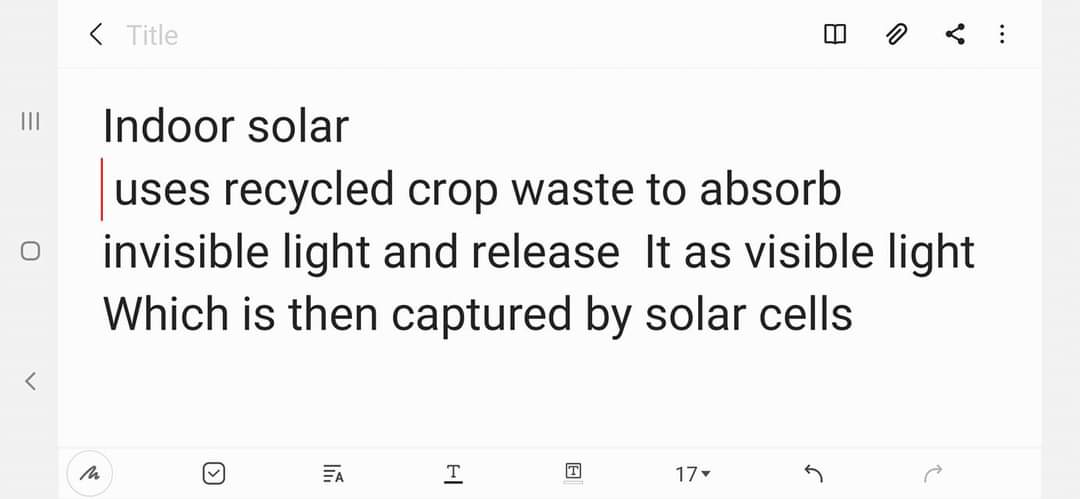
14 January, 2021 06:55
Proper Maintenance Procedures for Excavators
Ken Thayer | December 12, 2017
Excavators are heavy construction equipment with a bucket on the end of a jointed boom and a rotating cab referred to as the “house,” located on top of an undercarriage containing tracks or wheels. Designed for digging earth, loading material onto trucks and digging trenches, they are subjected to harsh conditions, often operating in the rain, hot sun, snow or mud. Just like an automobile, truck or any other piece of construction equipment, proper routine maintenance is critical to keeping them in good working order.
Proper maintenance maximizes fuel efficiency and reduces operating costs as well as equipment failure. Every minute an excavator or other heavy equipment is offline due to a breakdown costs the operator money in wages and lost productivity. Scheduled maintenance can help contain these expenses and maximize productivity.
An important part of all construction equipment maintenance is proper recordkeeping. Keeping this information up-to-date will help when evaluating the service life of the machine. Accurate records will also help prove that the machine has been properly serviced if the need to discuss issues with a dealer or manufacturer arises.
Daily Inspection Checklist
Take the time to perform a daily walk-around inspection before operating the excavator. The inspection does not require much time and can easily pay for itself if an issue is discovered.
The following items should be checked prior to operation:
Check to make sure there is enough coolant
Check engine oil and hydraulic oil levels
Check for leaks in compartments and under machine
Check track (see Undercarriage below for more detailed information)
Check coolers to make sure they are free of debris
Drain water from fuel/water separator
Check dust ejector from air filter
Make sure teeth are present on bucket and they are in good condition
Check wear plates on bucket
Grease all pins and bushings daily
Check controls and seat belt in cab and make sure they are operating properly
Turn on machine and check controls, windshield wipers, seatbelt and air conditioning system
Remove trash and debris from cab
Undercarriage
The undercarriage is an expensive part of owning and operating an excavator. When operating the machine, always work and dig over the idler, as opposed to the side or back of the excavator, and operate the machine in the forward direction as much as possible to avoid excess wear. If the excavator needs to sit for extended period of time, start the machine every few months and exercise the track to avoid pins seizing.
The following items should be inspected to ensure proper track operation:
Look for loose bolts on track and tighten if necessary.
Look for bent shoes on tracks. The shoes support each other and one bent shoe can lead to additional bent shoes.
Replace bent or damaged guards and guides on bottom of track (“rock guides”).
Inspect sprocket and drive at rear of track for oil leaks and to make sure all bolts are present and tight.
Clean out debris from around track and adjust track tension if necessary to avoid excess wear (Note: Do not run tracks too tight — refer to maintenance manual for proper tension.)
Make sure cotter pins in the master link are present.
The propel gearbox is frequently overlooked but is a vital component of machine performance. Gearbox oil should be changed at approximately 1,000-hour intervals, depending on the excavator manufacturer.
Undercarriage inspection. Source: Doosan Infracore Construction Equipment
Changing Air and Fuel Filters
Proper maintenance of air, fuel and hydraulic filters is an important maintenance requirement for equipment operating in dirty and wet conditions. Refer to the operator manual and follow the instructions carefully when changing air or fuel filters. Shortcuts are a common cause of contamination and problems.
Hydraulic oil is filtered on return to the tank and not the pressure side. To check or clean the hydraulic oil filter, release the pressure to the tank by loosening the cap. Clean the oil filter cap to prevent dirt and debris falling into the filter; remove the filter cap and then clean away any dirt from the top of the filter. Remove the filter and clean if necessary, making sure to follow the instructions carefully. Finally, reassemble, inspecting O-rings and components for damage and dirt.
Swing Bearing and Swing Gear Maintenance
The swing gear is a vital component and is often neglected when servicing the excavator. Both the bearing and the gear should have proper lubrication and be free from contamination. Make sure bearing is greased properly and inspect the swing gear to make sure enough grease is present and water or dirt hasn’t leaked into the compartment.
Spark Plugs
When checking or changing the spark plugs, make sure to clean and re-gap spark them. Do not forget to clean the threads and seat area and change the gasket before reinstalling the spark plug. Also, it is important to use proper torque when reinstalling spark plugs (refer to operator manual).
Low Power Troubleshooting
When troubleshooting a perceived low power issue, start with the simple things first. Look at the air filters and fuel filters for restrictions, such as leaves, and remove or clean if necessary. Measure the actual cycle times and compare to the specified service times in the service manual. This will determine whether there is an actual problem or a perceived issue. A valve adjustment may be required, but this is a more complex issue and may need to be performed by the dealer.
Following these maintenance procedures and keeping proper records will help reduce operating and unscheduled maintenance costs and keep your excavator in peak running condition.
Powered by CR4, the Engineering Community
Discussion – 0 comments
By posting a comment you confirm that you have read and accept our Posting Rules and Terms of Use.
Add your comment
RELATED ARTICLES
How the world’s first large-scale electric excavator works
Best practices for abrasive belt tensioning and preventative maintenance: Part 2
Air filters are the key to protecting your HVAC
Komatsu America Unveils Intelligent Machine Control Excavator
How to ward off seal and bearing failure
INDUSTRY RELATED
Building and Construction
Fundamentalsof explosion-proof pumps
Building and Construction
It’s here:CDCreleases official COVID-19 ventilation recommendations
Building and Construction
Watch:Sensorscould significantly shorten construction timelines
Building and Construction
Solarpowerinvestment by NJ hospital pays off
STAY CONNECTED WITH US
Engineering360
Home
About Us
Advertise With Us
Contact Us
Client Services
Employment Opportunities
Helpful Links
Top Categories
Site Map
Terms of Use
Privacy Policy
360 Websites
Datasheets360
Electronics360
© Copyright 2021 GlobalSpec – All rights reserved. Use of this website signifies your agreement to our Terms of Use.
excavator maintenance
maintenance tips to keep excavators in top condition
Drain the water separator every morning. …
Check track tension once a week. …
Don’t touch the air filter until the light goes on in the cab. …
Always buy a replacement filter from Volvo. …
Don’t mix other coolants with Volvo coolant
150w Solar light $279

75% Saltpeter 15% Charcoal 10% Sulfur
75% Saltpeter
15% Charcoal
10% Sulfur
 Solar
Solar 