Monthly Archives: June 2020
Boat and Marine Paint
Whether an entirely new layer or just a few minor touch-ups, a fresh coat of marine or boat paint can bring a much-needed makeover to an older vessel. This guide will walk you through the types of marine paint and how to apply them.
SHOP ALL MARINE AND BOAT PAINT
RELATED PRODUCTS
Boat Paint
Shop product
Spray Paint
Shop product
Automotive Spray Paint
Shop product
See More
Jump to Specific Section
Above vs. Below Waterline Marine Paint
Above and below waterline boat paints are specifically designed to withstand different elements over time.
Above the Waterline Marine Paint
Topside paint features an oil-based formula that can be applied above the waterline on metal and wood surfaces. It also works well as fiberglass boat paint. These paints are great for touching up scratches or minor dents to improve the appearance of your watercraft.
Typically, topside marine paint has a high-performance coating for UV resistance, color retention, flexibility and durability. They are also more resistant to cracking, chipping and peeling.
Below the Waterline Marine Paint
The bottoms of boats are constantly exposed to barnacles, algae, dirt and micro-organisms. When making repairs of dents and dings below the waterline on your boat, it is best to choose a flat marine paint that includes a hard, anti-fouling coat. These coats slowly release copper, which helps prevent the build-up of micro-organisms.
Barnacles and other micro-organisms create hull drag, which increases the amount of fuel needed to power the boat through the water. Left unattended, these species can destroy the fabric of the boat to the degree that water enters and the boat eventually sinks.
Anti-fouling paint contains a modified epoxy resin that adds needed durability to boats that are regularly hauled or remain in the water for long periods of time.
Because the durability of anti-fouling paint is stout, these paints are ideal for speedboats, powerboats and racing boats, as well as your everyday cruisers or houseboats.
Boat Paint Application Tips & Care
Both topside and bottom boat paint can be applied to fiberglass, metal and wood.
First, clean the area where you’ll be painting using a soft cloth and mineral spirits as needed, then let dry.
Use a brush or sponge to apply the paint. Topside paints dry in as little as two hours, so you won’t have to wait all day to get your speedboat, sailboat or fishing boat back in the water. If you are painting the bottom of your watercraft, wait four hours before exposing the paint to the water to ensure it is completely dry.
One quart will cover approximately 100 square feet. Follow manufacturer directions at all times.
For details on different kinds of deck paint, read our comprehensive buying guide.
RELATED GUIDES
Best Exterior Paint for Your Home
Tailgate Ideas
Best Coolers for the Beach, Travel and More
How to Use a Paint Sprayer
Explore More on Homedepot.com
Home Remodeling
Spiral Staircase Kits
Shop Bamboo Garden Fencing
Home Improvement
Commercial Doors
Two Piece Toilets
Shop Garage Door Opener Remotes & Keypads
Garage Door Parts
Lighting, Appliances & Smart Home
Ice Makers
Shop Commercial Refrigerators
Shop Big Ass Fans Ceiling Fans
Outdoors
Shop Porch Swings
Shop Patio Swings
DIY Projects & Home Services
How to Clean Laminate Floors
Electric Wall Heater Installation Services
See More
Download Our App
How can we help?
Call 1-800-466-3337
PC Site | Stores | ©2000-2020 Homer TLC, Inc | Privacy | Terms | California Privacy Rights | Do Not Sell My Personal Information | California Supply Chain Act
Provide Feedback
The Myth of Systemic Police Racism
Hold officers accountable who use excessive force. But there’s no evidence of widespread racial bias.
By Heather Mac Donald
June 2, 2020 1:44 pm ET

A demonstrator kneels before a police line in Washington, May 31.
PHOTO: SAMUEL CORUM/AGENCE FRANCE-PRESSE/GETTY IMAGES
George Floyd’s death in Minneapolis has revived the Obama-era narrative that law enforcement is endemically racist. On Friday, Barack Obama tweeted that for millions of black Americans, being treated differently by the criminal justice system on account of race is “tragically, painfully, maddeningly ‘normal.’ ” Mr. Obama called on the police and the public to create a “new normal,” in which bigotry no longer “infects our institutions and our hearts.”
Joe Biden released a video the same day in which he asserted that all African-Americans fear for their safety from “bad police” and black children must be instructed to tolerate police abuse just so they can “make it home.” That echoed a claim Mr. Obama made after the ambush murder of five Dallas officers in July 2016. During their memorial service, the president said African-American parents were right to fear that their children may be killed by police officers whenever they go outside.
Minnesota Gov. Tim Walz denounced the “stain . . . of fundamental, institutional racism” on law enforcement during a Friday press conference. He claimed blacks were right to dismiss promises of police reform as empty verbiage.
This charge of systemic police bias was wrong during the Obama years and remains so today. However sickening the video of Floyd’s arrest, it isn’t representative of the 375 million annual contacts that police officers have with civilians. A solid body of evidence finds no structural bias in the criminal-justice system with regard to arrests, prosecution or sentencing. Crime and suspect behavior, not race, determine most police actions.
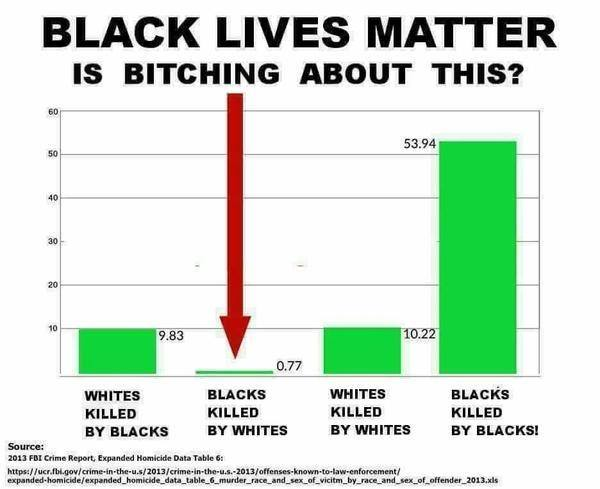
In 2019 police officers fatally shot 1,004 people, most of whom were armed or otherwise dangerous. African-Americans were about a quarter of those killed by cops last year (235), a ratio that has remained stable since 2015. That share of black victims is less than what the black crime rate would predict, since police shootings are a function of how often officers encounter armed and violent suspects. In 2018, the latest year for which such data have been published, African-Americans made up 53% of known homicide offenders in the U.S. and commit about 60% of robberies, though they are 13% of the population.
ADVERTISEMENT

The police fatally shot nine unarmed blacks and 19 unarmed whites in 2019, according to a Washington Post database, down from 38 and 32, respectively, in 2015. The Post defines “unarmed” broadly to include such cases as a suspect in Newark, N.J., who had a loaded handgun in his car during a police chase. In 2018 there were 7,407 black homicide victims. Assuming a comparable number of victims last year, those nine unarmed black victims of police shootings represent 0.1% of all African-Americans killed in 2019. By contrast, a police officer is 18½ times more likely to be killed by a black male than an unarmed black male is to be killed by a police officer.
On Memorial Day weekend in Chicago alone, 10 African-Americans were killed in drive-by shootings. Such routine violence has continued—a 72-year-old Chicago man shot in the face on May 29 by a gunman who fired about a dozen shots into a residence; two 19-year-old women on the South Side shot to death as they sat in a parked car a few hours earlier; a 16-year-old boy fatally stabbed with his own knife that same day. This past weekend, 80 Chicagoans were shot in drive-by shootings, 21 fatally, the victims overwhelmingly black. Police shootings are not the reason that blacks die of homicide at eight times the rate of whites and Hispanics combined; criminal violence is.
The latest in a series of studies undercutting the claim of systemic police bias was published in August 2019 in the Proceedings of the National Academy of Sciences. The researchers found that the more frequently officers encounter violent suspects from any given racial group, the greater the chance that a member of that group will be fatally shot by a police officer. There is “no significant evidence of antiblack disparity in the likelihood of being fatally shot by police,” they concluded.
A 2015 Justice Department analysis of the Philadelphia Police Department found that white police officers were less likely than black or Hispanic officers to shoot unarmed black suspects. Research by Harvard economist Roland G. Fryer Jr. also found no evidence of racial discrimination in shootings. Any evidence to the contrary fails to take into account crime rates and civilian behavior before and during interactions with police.
ADVERTISEMENT

The false narrative of systemic police bias resulted in targeted killings of officers during the Obama presidency. The pattern may be repeating itself. Officers are being assaulted and shot at while they try to arrest gun suspects or respond to the growing riots. Police precincts and courthouses have been destroyed with impunity, which will encourage more civilization-destroying violence. If the Ferguson effect of officers backing off law enforcement in minority neighborhoods is reborn as the Minneapolis effect, the thousands of law-abiding African-Americans who depend on the police for basic safety will once again be the victims.
The Minneapolis officers who arrested George Floyd must be held accountable for their excessive use of force and callous indifference to his distress. Police training needs to double down on de-escalation tactics. But Floyd’s death should not undermine the legitimacy of American law enforcement, without which we will continue on a path toward chaos.
Ms. Mac Donald is a fellow at the Manhattan Institute and the author of “The War on Cops,” (Encounter Books, 2016).
POPULAR ON WSJ.COM
BACK TO TOP
WSJ Membership Benefits
Customer Center
Legal Policies
©2020 Dow Jones & Company, Inc.
All Rights Reserved.
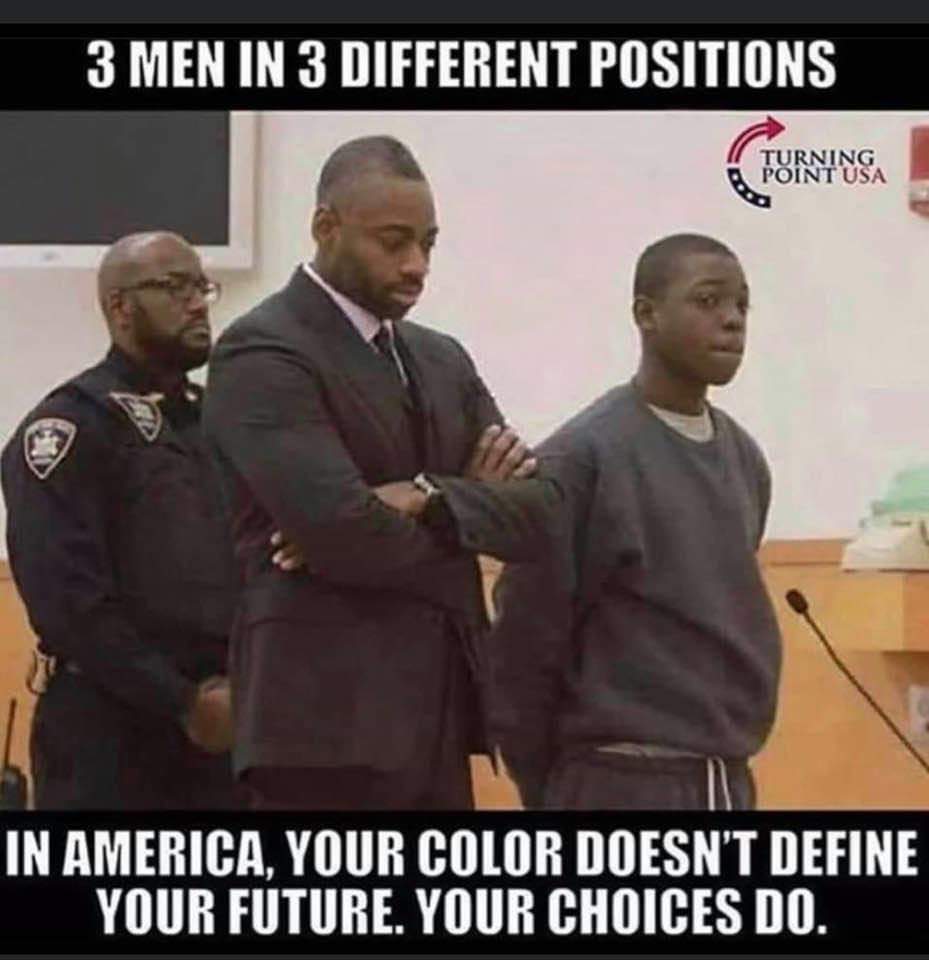
choices not color
Bad Apple
Cops cannot have bad apples. CAN airlines say most of our Pilots land a few bad apples crash?
black lives matter
VERIFY: Dean Koontz did not predict the coronavirus outbreak in his 1981 book – Health News – 13 WTHR Indianapolis
MyEternal
I’m so tired of being here
Suppressed by all my childish fears
And if you have to leave
I wish that you would just leave
‘Cause your presence still lingers here
And it won’t leave me alone
[Pre-Chorus]
These wounds won’t seem to heal
This pain is just too real
There’s just too much that time cannot erase
[Chorus]
When you cried I’d wipe away all of your tears
When you’d scream I’d fight away all of your fears
And I held your hand through all of these years
But you still have all of me
[Verse 2]
You used to captivate me
By your resonating light
Now I’m bound by the life you left behind
Your face it haunts
My once pleasant dreams
Your voice it chased away
All the sanity in me
[Pre-Chorus]
These wounds won’t seem to heal
This pain is just too real
There’s just too much that time cannot erase
[Chorus]
When you cried I’d wipe away all of your tears
When you’d scream I’d fight away all of your fears
And I held your hand through all of these years
But you still have all of me
[Bridge]
I’ve tried so hard to tell myself that you’re gone
But though you’re still with me
I’ve been alone all along
[Chorus/Outro]
When you cried I’d wipe away all of your tears
When you’d scream I’d fight away all of your fears
And I held your hand through all of these years
But you still have all of me
Ah, me, ah, me, ah
..
no lockdown in 7 States
On Tue, Jun 2, 2020, 4:01 PM Ray Hackett <3659745> wrote:
Seven states—Arkansas, Iowa, Nebraska, North Dakota, South Dakota, Utah, and Wyoming—
2 June, 2020 06:02
Seven states—Arkansas, Iowa, Nebraska, North Dakota, South Dakota, Utah, and Wyoming—
 Solar
Solar 