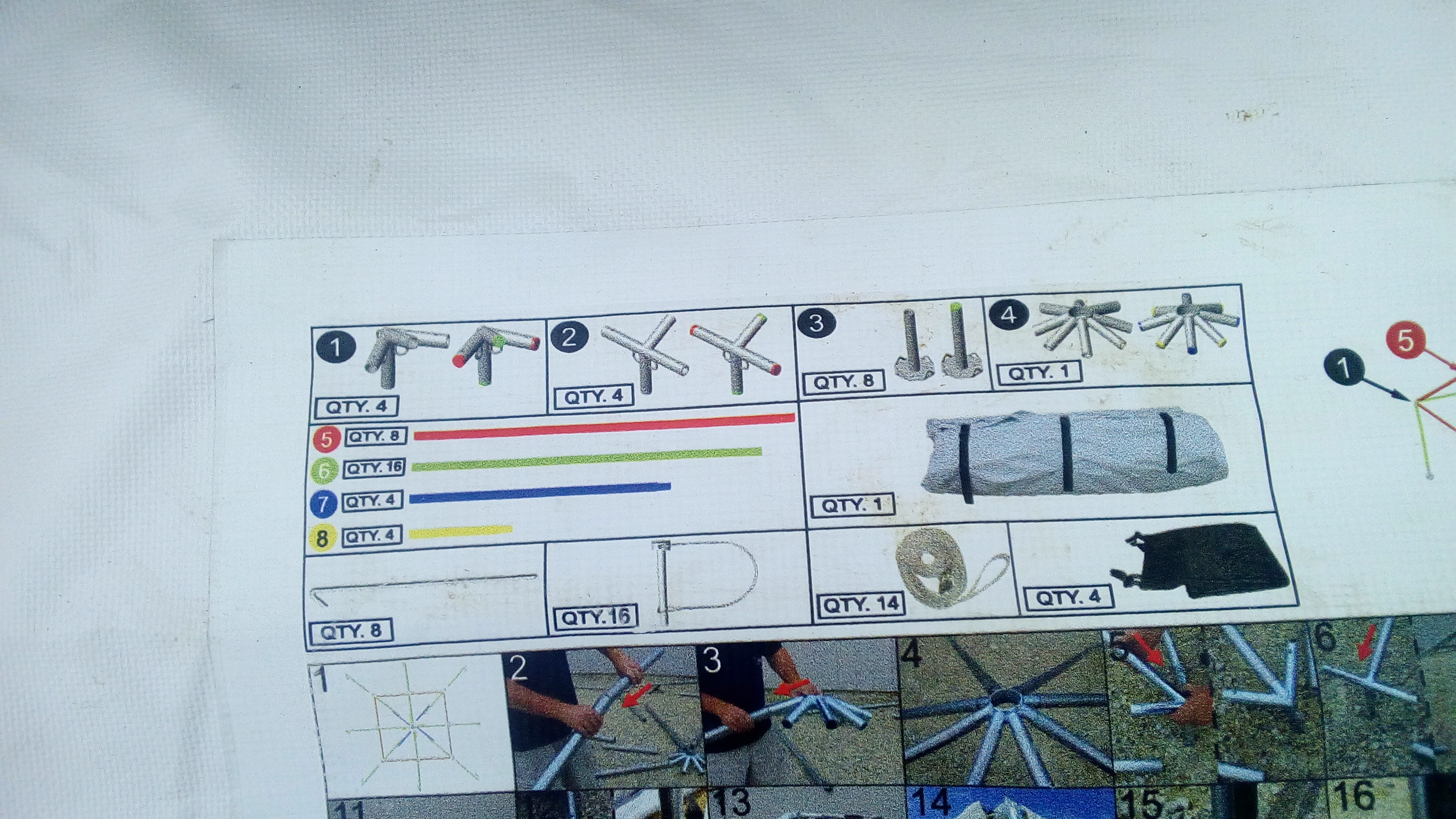
Diagram tent
https://www.facebook.com/enewscolorado/
https://www.facebook.com/NewMexicoNews18/
https://www.facebook.com/Arizonanews17/
https://www.facebook.com/Alaska-News-105705453360781/
https://www.facebook.com/HawaiiNews18/
https://www.facebook.com/Alabama-News-1370738583020144/
https://www.facebook.com/ArkansasNews18/
https://www.facebook.com/California-News-1484271911593772/
https://www.facebook.com/ConnecticutNews18/
https://www.facebook.com/Delaware-News-1222814344494554/
https://www.facebook.com/Florida-News-236889836798439/
https://www.facebook.com/Georgia-news-120009885165107/
https://www.facebook.com/IdahoNews/
https://www.facebook.com/illinoisNews18/
https://www.facebook.com/Indiana-news-316590362088028/
https://www.facebook.com/IowaNews18/
https://www.facebook.com/KansasNews18/
https://www.facebook.com/Kentucky-News-1615361451809352/
https://www.facebook.com/Louisiananews18/
https://www.facebook.com/MarylandNews18/
https://www.facebook.com/MichiganNews18/
https://www.facebook.com/MinnesotaNews18/
https://www.facebook.com/Mississippi-News-1824575684537802/
https://www.facebook.com/Missouri-News-111287712826972/
https://www.facebook.com/MontanaNews18/
https://www.facebook.com/Nebraska-News-201164863745664/
https://www.facebook.com/NevadaNews18/
https://www.facebook.com/NewHampshireNews18/
https://www.facebook.com/New-Jersey-News-119648271977812/
https://www.facebook.com/NewyorkNews18/https://www.facebook.com/North-Carolina-News-452317815145109/
https://www.facebook.com/North-Dakota-News-122398201693959/
https://www.facebook.com/Ohio-news-1398711716831347/
https://www.facebook.com/oknews17/
https://www.facebook.com/OregonNews18/
https://www.facebook.com/Rhode-Island-News-1884538335198697/
https://www.facebook.com/Saipan-News-501654126972941/
https://www.facebook.com/South-Carolina-News-319377998527766/
https://www.facebook.com/SouthDakotaNews18/
https://www.facebook.com/TennesseeNews18/
https://www.facebook.com/TexasNews18/
https://www.facebook.com/Utah-News-1979877032297351/
https://www.facebook.com/VermontNews18/
https://www.facebook.com/Virginia-news-117127542283242/
https://www.facebook.com/WashingtonNews18/
https://www.facebook.com/West-Virginia-news-214966085700367/
https://www.facebook.com/Wisconsin-news-1965508533685054/
https://www.facebook.com/Wyoming-news-719118161621228/
https://cnmilaw.org/pdf/superior/18-04-10-CV03-0079.pdf
Mahalo
SIGNATURE:
Clifford "RAY" Hackett www.rayis.me RESUME: www.rayis.me/resume
I founded www.adapt.org in 1980 it now has over 50 million members.
$500 of material=World’s fastest hydrofoil sailboat. http://sunrun.biz

Mahalo
SIGNATURE:
Clifford "RAY" Hackett www.rayis.me RESUME: www.rayis.me/resume
I founded www.adapt.org in 1980 it now has over 50 million members.
$500 of material=World’s fastest hydrofoil sailboat. http://sunrun.biz
THE “IMPOSSIBLE” TECH BEHIND SPACEX’S NEW ENGINE
Followers of the Church of Elon will no doubt already be aware of SpaceX’s latest technical triumph: the test firing of the first full-scale Raptor engine. Of course, it was hardly a secret. As he often does, Elon has been “leaking” behind the scenes information, pictures, and even video of the event on his Twitter account. Combined with the relative transparency of SpaceX to begin with, this gives us an exceptionally clear look at how literal rocket science is performed at the Hawthorne, California based company.
This openness has been a key part of SpaceX’s popularity on the Internet (that, and the big rockets), but its been especially illuminating in regards to the Raptor. The technology behind this next generation engine, known as “full-flow staged combustion” has for decades been considered all but impossible by the traditional aerospace players. Despite extensive research into the technology by the Soviet Union and the United States, no engine utilizing this complex combustion system has even been flown. Yet, just six years after Elon announced SpaceX was designing the Raptor, they’ve completed their first flight-ready engine.
The full-flow staged combustion engine is often considered the “Holy Grail” of rocketry, as it promises to extract the most possible energy from its liquid propellants. In a field where every ounce is important, being able to squeeze even a few percent more thrust out of the vehicle is worth fighting for. Especially if, like SpaceX, you’re planning on putting these new full-flow engines into the world’s largest operational booster rocket and spacecraft.
But what makes full-flow staged combustion more efficient, and why has it been so difficult to build an engine that utilizes it? To understand that, we’ll need to first take a closer look at more traditional rocket engines, and the design paradigms which have defined them since the very beginning.
THE OPEN CYCLE ENGINE: WASTEFUL BY DESIGN
Many of the best known rockets to have ever flown have used engines based on what is known as the gas-generator cycle, including the Saturn V, the Soyuz, the Delta IV, and even the Falcon 9. In fact, outside of the Space Shuttle, you could probably argue that nearly every milestone in the history of spaceflight was made with a gas-generator cycle engine. It’s a technology that dates back to the V-2 rocket, and is one of the key breakthroughs that made liquid-fueled rockets possible. But despite its incredible success, the technology is not without its faults.
Merlin engine with black preburner exhaust
Put simply, the gas-generator produces the gasses that spin a turbine, which in turn drives the propellant pumps. In some engines, the gas-generator operates on a different principle than the engine itself and has its own separate fuel supply. For example, the turbine of the V-2 rocket was spun with steam created by the chemical reaction between hydrogen peroxide and warm sodium permanganate.
The downside of this method is that the secondary fuel system for the gas generator adds additional weight and complexity, the last thing you want on a rocket engine. The more modern approach, used in engines such as the Falcon 9’s Merlin, is to power the turbine by burning a relatively small amount of the same fuel and oxidizer as the primary engine. In this case, the gas generator is usually referred to as a preburner.
But if the preburner was given the same fuel and oxidizer as the engine itself, and at the same ratio, it would essentially just be a smaller rocket. The exhaust would be far too hot to run through a turbine. To get around this, the preburner is run on a fuel-rich mixture which leads to incomplete combustion and lower exhaust temperature.
The defining characteristic of what’s known as an open cycle engine is that the exhaust from the preburner gets dumped overboard as a waste product. In some rockets this unburned fuel can be seen as a black streak alongside of the otherwise bright exhaust plume. It’s never been a secret that there were performance gains to be had by closing the cycle, that is, capturing the preburner exhaust and feeding it into the engine’s combustion chamber. But the sooty exhaust produced from the unburned kerosene is unsuitable for recirculating through the engine. It ended up being easier to simply build larger rockets than try to capture this lost fuel.
FINDING THE RIGHT MIX
In the 1950’s, Soviet scientists came up with something of a compromise. Instead of using a fuel-rich mixture in the preburner which produced an exhaust that couldn’t be safely recirculated into the engine, they experimented with running the preburner oxygen-rich. Unfortunately this idea solved one problem while creating another, as there was no metal that could survive the incredibly hot oxygen-rich gas produced by the preburner. In fact, American scientists had deemed it impossible, and believed claims that their Soviet counterparts were working on the concept to be Cold War propaganda.
Eventually the Soviets mastered the metallurgy required to build the turbine and developed several engines that operated on the oxygen-rich preburner concept. The exhaust was piped into the engine’s combustion chamber and recovered at least some of the propellants which would otherwise have been dumped overboard. The modern day Russian RD-180 engine, currently in use by the American Atlas V, is a continuation of this technology.
American engineers went in the opposite direction. They believed that a fuel-rich mixture in the preburner was possible and could be done with existing metal alloys, so long as hydrogen was used as the fuel instead of kerosene. This ultimately lead to the development of the Space Shuttle Main Engine, which to date remains the most efficient liquid fuel rocket engine ever flown. While the Space Shuttle has long since retired, a variation of the engine itself will go on to power the Space Launch System. It will be the most powerful rocket NASA has ever built and is slated to begin missions in 2020.
CLOSING THE CYCLE
Either approach, whether it recaptures the oxidizer or fuel rich preburner exhaust, is clearly an improvement over dumping everything overboard. But neither is an ideal solution as there’s still potentially combustible products being wasted. Essentially the Soviet Union and the United States had both solved different halves of the same problem; to truly close the cycle, the fuel-rich and oxidizer-rich preburner designs would need to be utilized simultaneously in the same engine.
The logical end result is the full-flow staged combustion engine. Such an engine has two independent pumps for oxidizer and fuel, spun by two turbines powered by their own dedicated preburners. But unlike the gas-generator cycle which burns just a small amount of fuel and oxidizer in the preburner, in a full-flow staged combustion engine, all of the fuel and oxidizer is run through their respective preburners. In other words, the fuel is burned twice: once at a lower efficiency in the preburners to produce energy for spinning the turbines, and again at maximum efficiency in the combustion chamber to produce thrust. While an exceptionally difficult engine to design and test, it completely eliminates the waste of the gas-generator cycle.
But increased fuel efficiency isn’t the only advantage to this design. For example, the seals separating the turbine and the pump are less critical, as there’s no concern of contaminating the pumped liquid; ultimately they’re going to the same place. In addition, the fact that the fuel and oxidizer enter the combustion chamber as gasses further improves engine efficiency over conventional designs which spray them in as liquids.
The individual turbines on a full-flow staged combustion engine also tend to run cooler and at lower pressure than the single turbine used in a conventional rocket engine. This puts less stress on the turbine impellers, and should allow them to run for longer before they need to be inspected and replaced. Given SpaceX’s focus on reusability, this is likely seen just as important as the increased fuel efficiency.
THE WAIT IS ALMOST OVER
SpaceX Starship Prototype
While it will be the first one to fly, the SpaceX Raptor isn’t actually the first full-flow staged combustion engine to be built. The RD-270 was completed in 1967 by the Soviet Union as part of their program to reach the Moon, and performed several static test burns. But after the United States landed on the Moon in 1969, effectively winning the Space Race, the engine (and the rocket it was meant to power) was canceled. Less complex, and ultimately cheaper, engines were used for the remainder of the Soviet space program.
In the 1990’s, the United States Government expressed an interest in the development of a domestic full-flow staged combustion engine. While there was promising turbine and preburner development by contractors Rocketdyne and Aerojet, neither the Air Force nor NASA chose to provide the funding that would have been required to complete the entire engine.
So when will Raptor finally become the first full-flow staged combustion engine to leave Earth? If you believe Twitter, very soon. Elon Musk claims a prototype of the Raptor-powered Starship will be making low-altitude “hops” around their test facility located near Brownsville, Texas within the next couple of months. Of course a lot can happen between now and then, so it’s entirely possible that date may slip. But even still, it seems like 2019 will finally be the year that the “Holy Grail” of rocket engines finally takes to the air. Here’s hoping its been worth the wait.
1.5 Million Dead: This Is What Would Happen If America Nuked North Korea’s Capitol
Welcome to World War III.
North Korea is the most difficult of targets for the U.S. intelligence community to unearth. Intelligence collection and analysis is an incredibly time-consuming and dangerous business, where it often takes months and maybe even years of patient rapport-building (and in some cases, blackmail) to recruit an agent or flip an adversary. The Central Intelligence Agency, the National Security Agency, and the Office of the Director of National Intelligence don’t have that luxury with North Korea. What Washington does have is satellite imagery from above and electronic interception, but even Director of National Intelligence Dan Coats confessed to the Senate Intelligence Committee that “using that as an access to collection is—we get very limited results.”
We do, however, know one thing for certain: in the crazy scenario whereby Kim Jong-un orders his nuclear forces to launch a nuclear-tipped ICBM towards an American city (one, by the way, that would rest on the supposition that Kim is a lunatic who believes Washington would back down after an attack), President Donald Trump wouldn’t hesitate to retaliate with the “fury and fury” of America’s nuclear weapons arsenal. There probably wouldn’t even be a debate with Defense Secretary Jim Mattis, National Security Adviser H. R. McMaster, or U.S. Strategic Command commander Gen. John Hyten. And if there was a discussion, it would focus on where, not whether, to hit North Korea.
Pyongyang, the capital city where millions live, would be the obvious target for a retaliatory nuclear strike. Kim Jong-un would likely be scurried away in a bunker somewhere with his sister and his senior generals long before Washington gave the order to the men and women who manage the U.S. nuclear triad to execute a launch, but that wouldn’t really matter. The purpose of a U.S. retaliatory attack would be to create so much destruction on North Korea’s military chain-of-command, its minuscule economy, its hereditary political system, and its physical existence as a nation that Kim Jong-un wouldn’t continue throwing nukes at the problem. Ideally, he wouldn’t have any more nukes to launch.
Report Advertisement
Using Alex Wellerstein’s NukeMap algorithm website, I attempted to determine the extent of the destruction in human terms if the United States targeted the center of Pyongyang with a single 750-kiloton device (the largest nuclear device the United States possesses in its arsenal is the B83 with a 1.2 megaton yield). Because Pyongyang is a sense city—denser than Los Angeles, which is a major urban sprawl—one blast of a nuclear device with that magnitude would kill over 1.5 million people. Taking UN population statistics into account ( 25.281 million ), one 750-kiloton nuclear blast in downtown Pyongyang would wipe out nearly 6 percent of the North Korea’s total population. To better comprehend the deep extent of that damage for North Korea, that would be like killing 19.27 million Americans in one day from one attack.
Add estimated injuries into the equation (855,410), and the casualties would rise to over 2.3 million.
As to which structures in Pyongyang would cease to exist and which would only suffer moderate damage, take a look at the map . The workers and visitors of the Victorious Fatherland Liberation War Museum in northwest Pyongyang would have a 50 percent to 90 percent chance of dying within the first hours, days or weeks from the radiation exposure. Receipts at the Kaeson Youth Park slightly to the northeast would be killed as concrete buildings collapsed. Across the Taedong River, the Ideals of North Korean Workers facility would have the same bloody ending. The thermal radiation radius, the outer ring of the yield, where people would be dealing with third degree burns requiring possible amputations, would extend 11.1 kilometers in all directions. Pyongyang’s skyline wouldn’t really be a skyline anymore; all those fancy skyscrapers that Kim spent so much money on would be a wasted investment.
Nobody wants to see such a man-made disaster occur. It would a terrible, terrible waste of human potential and a moral travesty. Any nuclear attack anywhere in the world would expose the hollow progress of human civilization, that despite all of the technology and medical advancements made over centuries, humans in the twenty-first century are as primitive as cavemen.
But North Korea should be under no illusions. If it were irrational enough to send a nuke towards an American city, then it better anticipate its demise as a nation. Donald Trump wouldn’t accept anything but forceful retaliation—no American president would.
https://www.lawhelp.org/hi/self-help-forms
Mahalo
SIGNATURE:
Clifford "RAY" Hackett www.rayis.me RESUME: www.rayis.me/resume
I founded www.adapt.org in 1980 it now has over 50 million members.
$500 of material=World’s fastest hydrofoil sailboat. http://sunrun.biz
https://ecf.nmid.uscourts.gov/cgi-bin/login.pl?logout
Mahalo
SIGNATURE:
Clifford "RAY" Hackett www.rayis.me RESUME: www.rayis.me/resume
I founded www.adapt.org in 1980 it now has over 50 million members.
$500 of material=World’s fastest hydrofoil sailboat. http://sunrun.biz
STATEMENT OF COMMON-LAW MARRIAGE
We, the undersigned, acknowledge that we are living in a husband and wife relationship that
began on ___________________. We have assumed the responsibilities of a common-law
marriage, and offer the following attached documentation as proof of this relationship for the
purpose of qualifying the spouse not employed by the City of Oklahoma City, for qualified
dependent medical, dental, and life insurance benefits.
Both parties to this statement represent that they are legally competent to enter into a marriage
relationship that may be entered into, maintained, or abrogated as provided by law. The
absence of a marital relationship will disqualify the spouse not employed by the City of
Oklahoma City as a dependent beneficiary.
The parties acknowledge that if any relevant fact has been misstated, whether intentionally or
unintentionally, by or on behalf of any person that results in improper coverage under benefit
plans offered by the City of Oklahoma City, the individual is subject to termination from said
plans and other appropriate action. Upon the discovery of such misstatement, equitable
adjustment of any contributions or benefits paid will be made.
Date:______________
Perovskite technology
 Solar
Solar 